:format(webp))
:format(webp))
Why Startups Reach for ReactJS
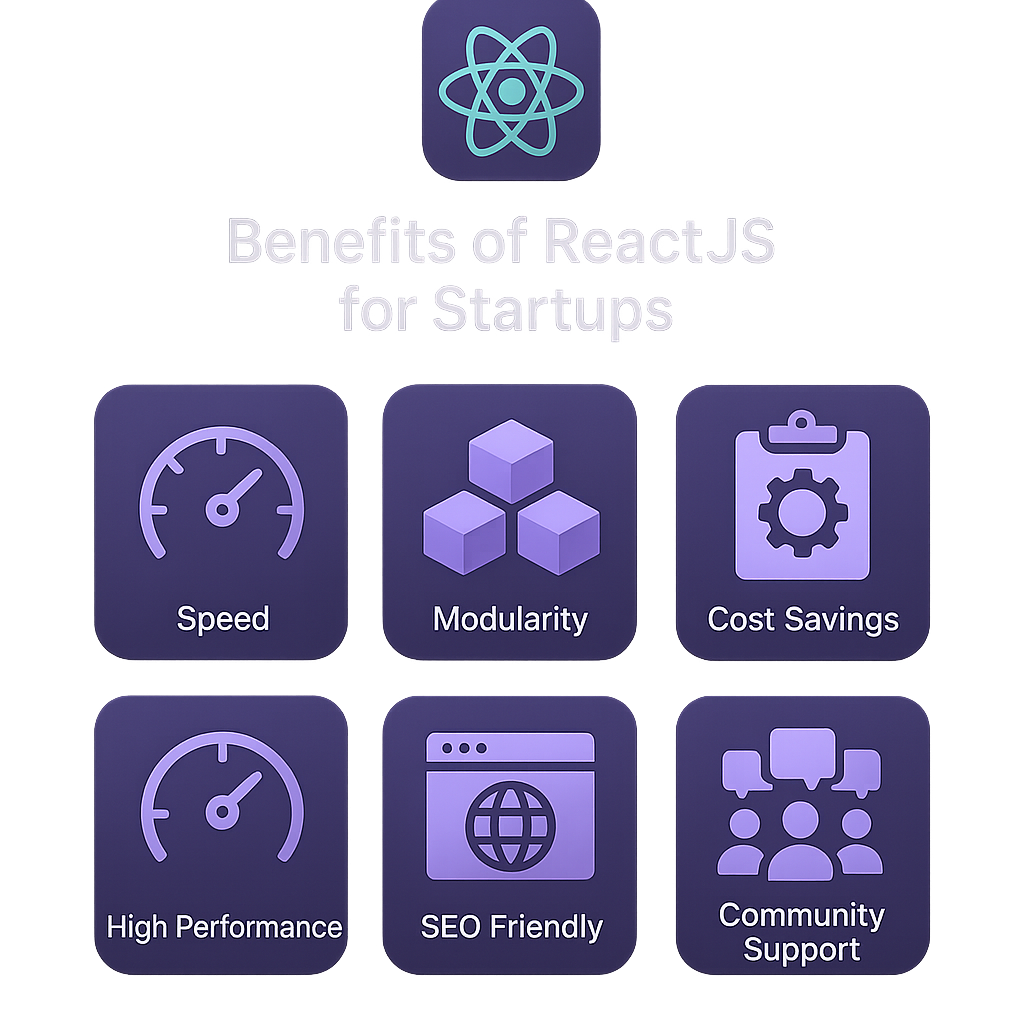
ReactJS shines when you need speed, modularity, and performance without breaking the bank.
Faster development cycles thanks to React’s virtual DOM and hot reloading capabilities
Reusable components that cut down on duplicate code
Cost-effective maintenance as your app grows
High rendering performance for smooth user experiences
SEO friendliness through server-side rendering tools like Next.js
A vast community and talent pool ready to troubleshoot, as seen on React's GitHub repository
Statistic: React registers over 17 million weekly downloads on npm .
Rapid Prototyping and MVP Development
React’s component model lets you assemble user interfaces like building blocks. You can spin up an MVP in days, validate product–market fit and pivot quickly before investing heavily in backend features. For more insights on this process, check out our post on Building a React.js SaaS Product: From MVP to Scale .
“The ability to reuse UI components enabled us to launch our beta version two weeks ahead of schedule.” – Startup CTO speaking at React Europe 2023

Common Startup Use Cases
React adapts well to a variety of web apps that startups often build:
Single-Page Applications (SPAs) for seamless user flows
E-commerce storefronts with dynamic product listings
Data-visualization dashboards for real-time analytics
Social media or community platforms
Interactive admin panels
App Type | Key Benefits |
|---|---|
Single-Page Application (SPA) | Seamless user flows and fast navigation without full page reloads |
E-commerce Storefront | Dynamic product listings and real-time cart updates |
Data-Visualization Dashboard | Real-time analytics and interactive data displays |
Social/Community Platform | High user engagement with interactive feeds and messaging |
Admin Panel | Rich interactivity for managing users, content, and settings |
Building Data-Visualization Dashboards
Libraries like Recharts or Victory plug straight into React, so you can render charts, maps and custom visuals without reinventing the wheel.
What to Watch Out For
No tool is perfect. With React, you may run into:
Complex state management in large apps (consider Redux or Zustand)
Search-engine indexing issues if SSR isn’t configured
Initial build complexity when setting up Babel, Webpack or Vite
Frequent updates that can introduce breaking changes
Not ideal for native mobile without React Native
If your project heavily relies on mobile-first features or deep native integrations, explore alternatives like Vue.js or Angular. For insights on mobile development, check out our post on Why Your Business Should Consider React Native for App Development .
Leveraging the Open-Source Ecosystem and Serverless Integration
React benefits from a massive open-source community, slashing development time and cost:
Hundreds of component libraries, UI kits and dev tools
Ready-made templates and boilerplates for admin dashboards, e-commerce, blogs
Plugins for testing (Jest, React Testing Library) and performance audits
You can also pair React with serverless backends—AWS Lambda, Azure Functions or Google Cloud Functions—to:
Pay only for actual compute time
Scale automatically in response to traffic
Simplify your DevOps footprint
For a step-by-step walkthrough, see the AWS Amplify guide to developing a serverless React application .

Hiring ReactJS Talent for Your Startup
Finding developers who thrive in a startup setting is as important as technical chops. Look for candidates who:
Grasp your product vision and can adapt as it evolves
Demonstrate hands-on React experience—check live code snippets or GitHub repos
Communicate clearly about trade-offs and architectural decisions
Have worked in cross-functional teams or worn multiple hats
“In early stages, I valued generalists who could pitch in on backend APIs or design tweaks as much as write React components.”
– Head of Engineering at FinTech startup.
For more tips on hiring, refer to our guide on How to Hire React.js Developers: A Complete Guide .
Real-World Success Stories
Seeing how others scaled with React can guide your own journey:
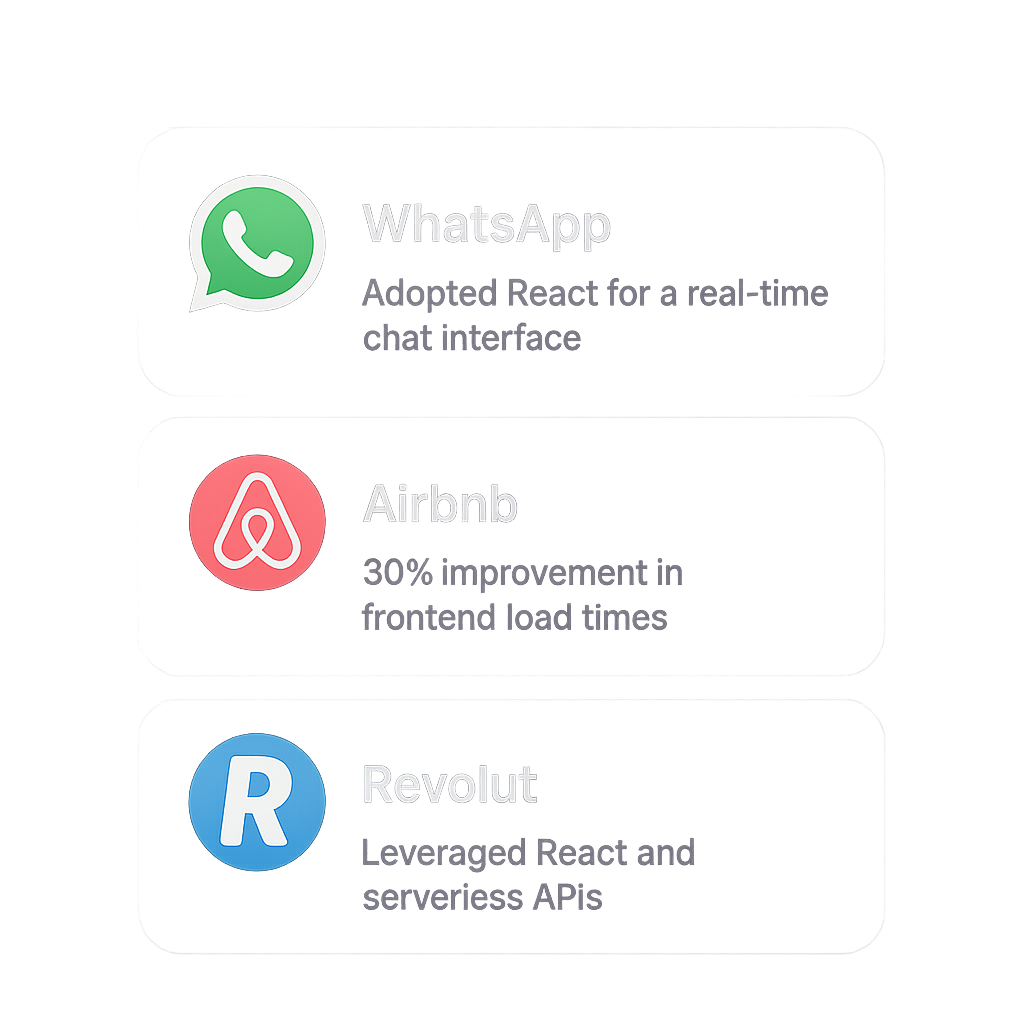
WhatsApp Web architecture shows how React was adopted to manage a complex, real-time chat interface across browsers.
Airbnb’s optimized bootstrap performance led to a 30% improvement in frontend load times.
Revolut’s frontend architecture leverages React and serverless APIs to support millions of users.
Your ReactJS Startup Roadmap
You now have a clear view of why ReactJS suits startups—it’s rapid prototyping power, modular component structure, rich ecosystem and cloud-native friendliness. You also know how to navigate challenges, hire the right talent and draw inspiration from trailblazers who scaled fast with React. Put these insights into practice, and you’ll be on track to ship your next web app confidently.
For insights on whether you should use pure React or a meta-framework like NextJS, see our article on React vs. Next.js: Which One is Right for Your Web App? .
:format(webp))
:format(webp))
:format(webp))