:format(webp))
:format(webp))
Freelancer vs. Agency: Which Is Right for Your JavaScript Project?
I’ll walk you through the key factors—from cost and expertise to legal risks and long-term support—so you can decide whether hiring a JavaScript freelancer or partnering with a development agency makes sense for your next project.
Evaluating Your Project Requirements
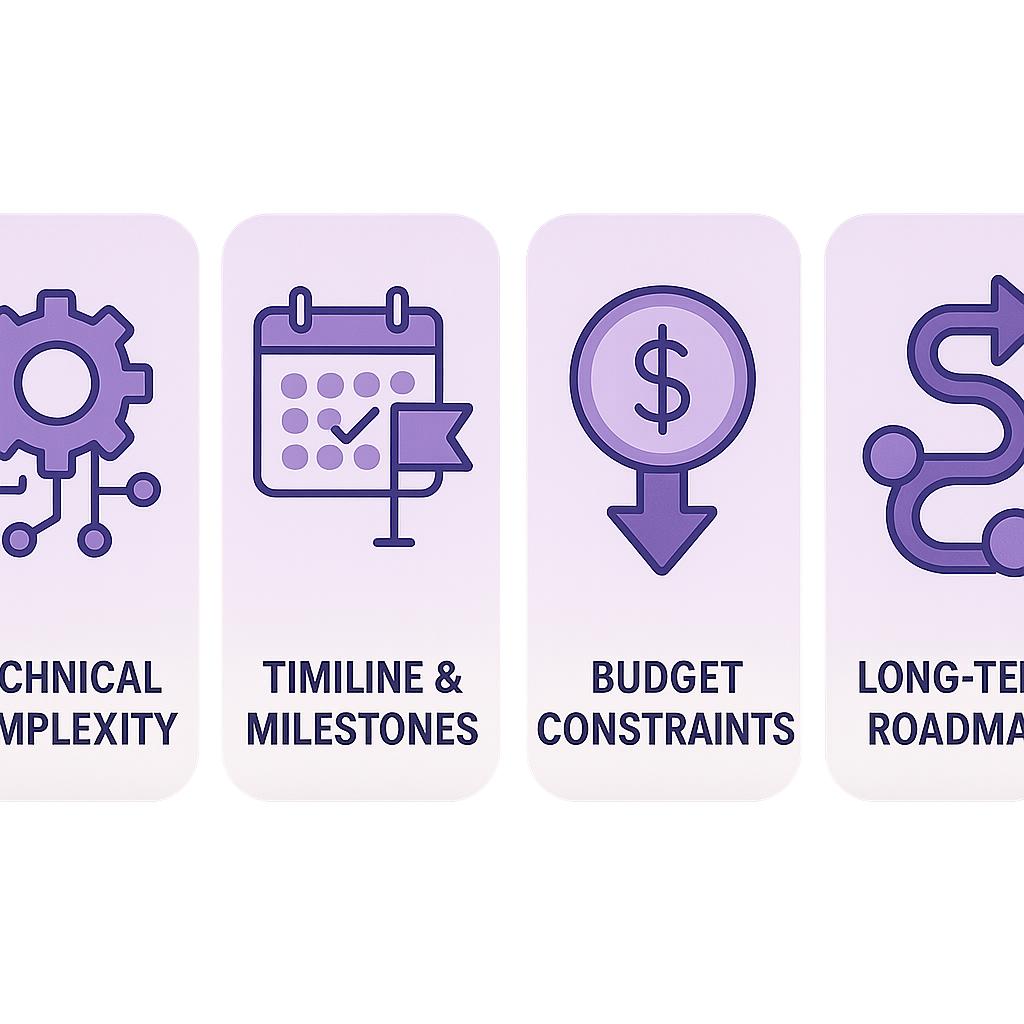
Before anything else, nail down your project’s scope:
Technical complexity (front end, back end, integrations)
Timeline and milestones
Budget constraints
Long-term roadmap (updates, new features)
Comparing Costs: Freelancers vs. Agencies
According to Upwork’s Freelance Forward 2023 report , freelancers often quote lower hourly rates, but agencies bundle project management, quality control and support into a single fee. Keep in mind:
Hourly vs. fixed price: Freelancers usually bill by the hour; agencies may offer project-based pricing.
Hidden scaling costs: Managing multiple freelancers can add up—onboarding time, coordinating tasks and onboarding new contractors—sometimes consuming 15–25% of your budget, according to Deloitte’s Global Outsourcing Survey .
Payment terms and deposits: A FreshBooks guide on freelancer payment terms recommends deposits of 30–50% up front.
Expertise, Training and Access to Emerging Technologies
An agency typically provides a team with complementary skills—UI/UX, back-end APIs, DevOps—and invests in ongoing training. For example, Training Magazine’s 2022 State of the Industry report shows service firms dedicate over 30% of their L&D budgets to new frameworks and tools. Freelancers may specialize deeply in one library or framework, but they often lack access to the broader training resources agencies maintain.
When a Specialist Freelancer Shines
You need rapid, focused work on a specific feature (e.g., React component).
Your codebase is stable and well-documented.
When a Cross-Functional Agency Works Best
You anticipate evolving requirements or scaling your development team.
You want centralized project management and quality assurance.
Team Collaboration and Communication
Coordinating across time zones and cultural backgrounds can slow progress if you hire multiple freelancers. A Harvard Business Review analysis notes that “asynchronous handoffs often introduce delays and misunderstandings” in distributed projects.

Scalability, Turnover and Legal Compliance
Scalability and Hidden Costs
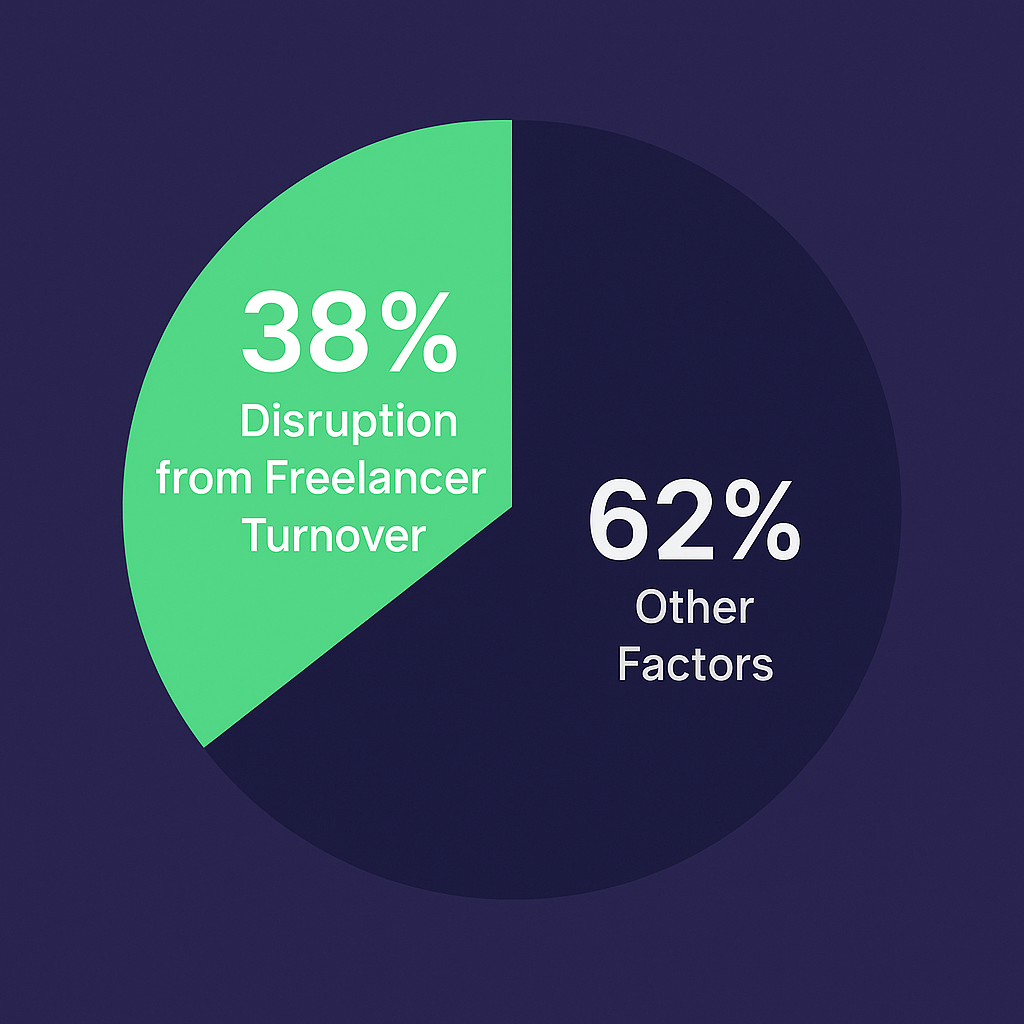
Adding or removing freelancers mid-project may seem flexible, but high turnover among independents—reported by Deloitte as disrupting up to 38% of outsourcing arrangements—can derail timelines and force repeated onboarding[^1].
Legal and Compliance Risks
Scaling globally with freelancers can trigger complex tax and labor laws. A PwC study found that 30% of companies faced cross-border compliance issues when engaging gig economy workers. Failure to register with local authorities can even result in fines under the EU General Data Protection Regulation or equivalent national legislation.
Quality Assurance and Testing
Agencies often build QA engineers into their proposal, running structured test plans, automated builds and regression suites. Freelancers may not have dedicated testers, so you risk overlooking edge-case bugs. One way to mitigate this is to insist on a third-party code review or adopt a continuous integration pipeline yourself, as outlined in Atlassian’s continuous delivery guide .
Intellectual Property and Ownership
With freelancers, you must secure NDAs and clear IP-assignment clauses in your contract. Agencies typically include IP protection and data-security protocols in their standard terms, reducing legal overhead. Always verify that deliverables automatically transfer ownership to you upon payment—following best practices such as those in WIPO’s guidance on intellectual property contracts .
Support and Maintenance
Freelancers might move on once a feature is delivered, whereas agencies often offer post-launch support agreements covering:
Bug fixes and security patches
Feature enhancements
Performance monitoring
IBM provides an overview of software maintenance best practices that highlights how ongoing service agreements can reduce downtime and technical debt.
Making Your Choice
Here’s a quick comparison to guide you:
Freelancers
Lower hourly rates
Direct communication
Good for small, well-scoped tasks
Potential turnover and hidden management costs
Agencies
Broader skill sets under one roof
Built-in QA, legal and compliance frameworks
Better for complex, evolving projects
Higher upfront investment
Criteria | Freelancer | Agency |
|---|---|---|
Hourly Rate | Generally lower | Bundled into project fee |
Communication | Direct, one-on-one | Standardized team channels |
Ideal Project | Small, well-scoped tasks | Complex, evolving projects |
Risk/Cost | Potential turnover and hidden coordination costs | Higher upfront investment |
The Path Forward
Whether you choose a seasoned freelancer for a targeted piece of work or an agency for an end-to-end solution, aligning your decision with your project’s scale, complexity and risk tolerance is key. Map out your priorities, review portfolios or case studies, and don’t skip the references. That way, you’ll find the right partner to bring your JavaScript vision to life.
:format(webp))
:format(webp))
:format(webp))