:format(webp))
:format(webp))
JavaScript Development Services: What You’ll Discover in 2024
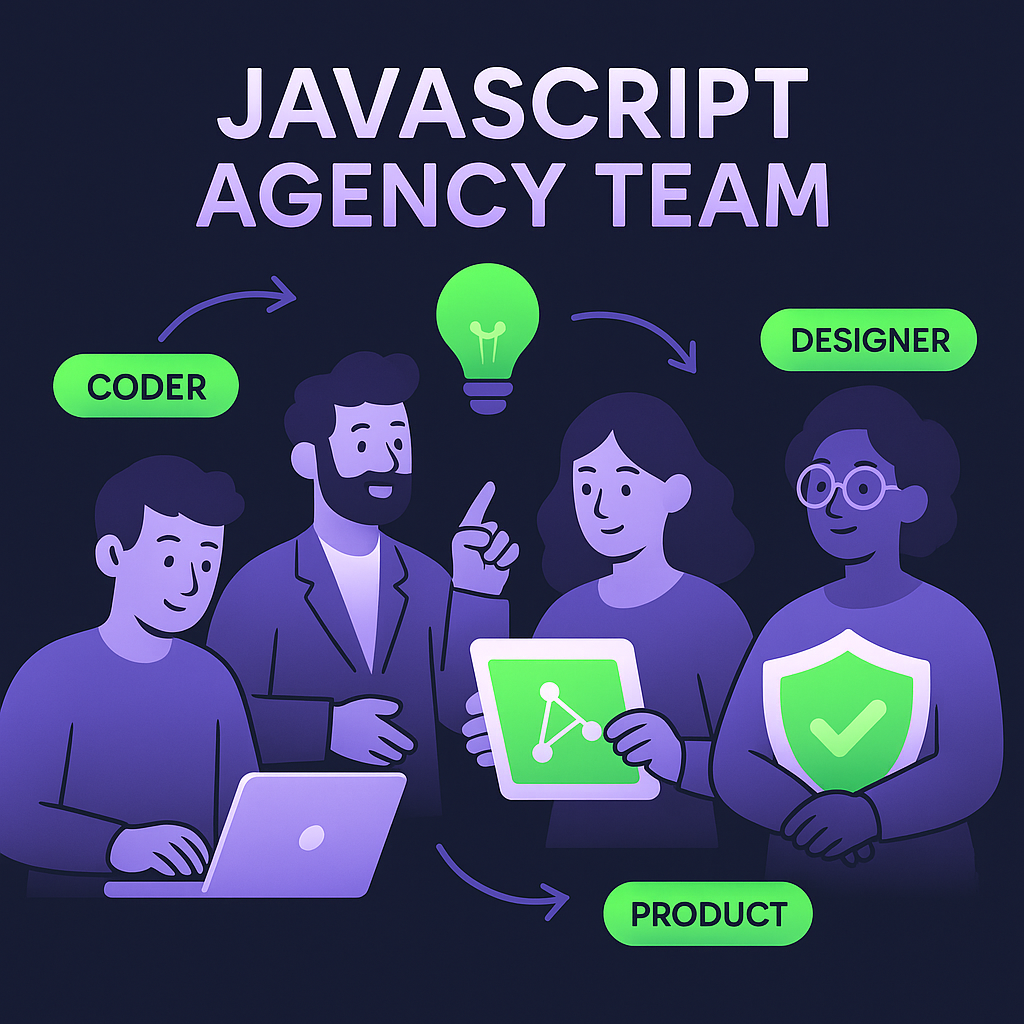
When you partner with a professional JavaScript agency, you’re not just hiring coders—you’re gaining strategists, designers and guardians of your product’s future. In this article, you’ll learn about the essential services top agencies provide and explore cutting-edge trends—from new runtimes and framework choices to real-time features and legacy modernization. By the end, you’ll know how to choose the right partner and technology stack for your next project.
Core Services Offered by Leading Agencies
Most agencies cover the fundamentals, ensuring your app is robust, user-friendly and future-proof:
Front-End Development: Building interactive interfaces with React, Vue, Svelte or native JavaScript.
Back-End Development: Crafting APIs and business logic using Node.js or its alternatives.
Full-Stack Development: Managing both client and server sides for seamless integration.
UI/UX Design: Creating wireframes, prototypes and polished designs that delight users, following Nielsen Norman Group’s user experience principles .
JavaScript Consulting: Advising on architecture, best practices and performance tuning.
Custom JavaScript Development: Delivering tailor-made modules, libraries or microservices.
Cross-Platform Development: Building mobile, desktop or web apps that share code.
Maintenance and Support: Ensuring uptime, applying security patches and fixing bugs.
Code Audits & Reviews: Assessing code quality, identifying vulnerabilities and recommending improvements.
Project Rescue: Stepping in to salvage failing projects or accelerate stalled development.
Service | Description |
|---|---|
Front-End Development | Building interactive interfaces with React, Vue, Svelte or native JavaScript. |
Back-End Development | Crafting APIs and business logic using Node.js or its alternatives. |
Full-Stack Development | Managing both client and server sides for seamless integration. |
UI/UX Design | Creating wireframes, prototypes and polished designs that delight users. |
JavaScript Consulting | Advising on architecture, best practices and performance tuning. |
Custom JavaScript Development | Delivering tailor-made modules, libraries or microservices. |
Cross-Platform Development | Building mobile, desktop or web apps that share code. |
Maintenance and Support | Ensuring uptime, applying security patches and fixing bugs. |
Code Audits & Reviews | Assessing code quality, identifying vulnerabilities and recommending improvements. |
Project Rescue | Stepping in to salvage failing projects or accelerate stalled development. |
Emerging Runtimes: Beyond Node.js
Node.js has dominated server-side JavaScript for over a decade , but two newcomers are challenging its throne:
Bun claims dramatically faster startup and lower memory use. According to its team, Bun runs JavaScript and TypeScript up to three times quicker than Node.js on common benchmarks[^1].
Deno offers built-in security flags, a standard library and native TypeScript support—eliminating transpilation steps and reducing configuration complexity[^2].
These runtimes can influence an agency’s recommendation, especially when performance, security or TypeScript integration are top priorities.
Runtime | Startup Speed | Memory Usage | TypeScript Support | Security |
|---|---|---|---|---|
Node.js | 1x baseline | moderate | manual transpilation | standard |
Bun | 3x faster | lower | native | basic |
Deno | 1x baseline | moderate | native | built-in flags |
Framework Choices: React vs. Vue vs. Svelte
Choosing the right front-end framework affects scalability, maintainability and developer happiness:
React
React has a huge ecosystem and community support.
Flexible but often requires additional libraries (routing, state management).
Vue
Vue has a gentle learning curve and official routing and state management solutions that simplify complex UI updates.
Svelte
Compiles away framework code, producing smaller bundles and faster load times[^3].
Less boilerplate and direct access to DOM APIs.
Framework | Ecosystem & Community | Learning Curve | Bundle Size | Boilerplate |
|---|---|---|---|---|
React | Huge | Moderate to Steep | >200 KB (pre-compression) | High |
Vue | Medium | Gentle | ~150 KB | Moderate |
Svelte | Small | Gentle | <100 KB | Low |
Why Bundle Size Matters
Smaller bundles mean faster first-load speeds, lower data usage and better SEO. Svelte’s compile-time approach often yields sub-100 KB scripts, whereas a comparable React app may exceed 200 KB before compression.
Tech Stack Combinations: MERN, MEVN and More
Agencies often recommend popular stacks for predictable results:
MEVN (MongoDB, Express, Vue, Node.js)
SERN (SQL, Express, React, Node.js)
PERN (PostgreSQL, Express, React, Node.js)
Your choice depends on factors like:
Team expertise
Data model complexity
Real-time requirements
Long-term maintenance
An agency will assess these aspects and tailor the stack to your goals.
Legacy Code Modernization
Outdated JavaScript or legacy frameworks can hinder development speed and security. Modernization services include:
Migrating from older libraries (e.g., jQuery , Backbone.js , Angular) to modern frameworks.
Refactoring monolithic codebases into modular, testable components.
Upgrading from ES5 to ES6+ for cleaner syntax and improved performance.
These efforts reduce tech debt and pave the way for new features.
Real-Time Application Development
Features like live chat, collaborative editing or real-time dashboards rely on protocols such as WebSockets:
Agencies use libraries like Socket.IO or native WebSocket APIs to push updates instantly[^4].
Real-time capabilities boost user engagement and can be critical for SaaS, trading platforms or multiplayer apps.
Your Next Step in the JavaScript Journey
You’ve seen what agencies offer—from standard front-end/back-end work to advanced runtime options, framework trade-offs, stack recommendations, legacy overhauls and real-time features. Armed with this knowledge, you can vet potential partners more effectively and choose a tech path that aligns with your project goals. The right agency won’t just write code—they’ll guide your vision and keep your app ahead of the curve.
Want a free consult?
We're ready to hop on a call and give our insights free of charge
Free Discovery Call:format(webp))
:format(webp))
:format(webp))