:format(webp))
:format(webp))
20 Questions to Ask a Development Agency Before You Hire Them
When you’re about to invest in a software project, you need more than just a good pitch. You need clarity on how the agency works, how they’ll protect your interests, and how they’ll keep you in the loop every step of the way. By the end of this article, you’ll have a checklist of 20 questions covering everything from their track record and project approach to transparency, risk management, cultural fit, and beyond.
Agency Profile and Track Record
Before you dive into specifics, get a picture of who you’re working with.
What’s your company’s background and size?
Can you share examples of projects similar to mine?
Who will be on my team, and what are their roles?
Do you contribute to open-source projects or communities?
Question | Why It Matters |
|---|---|
What’s your company’s background and size? | Ensures the agency has the capacity and expertise to handle your project |
Can you share examples of projects similar to mine? | Demonstrates relevant experience and success stories |
Who will be on my team, and what are their roles? | Clarifies responsibilities and expertise of each team member |
Do you contribute to open-source projects or communities? | Signals technical leadership and community engagement |
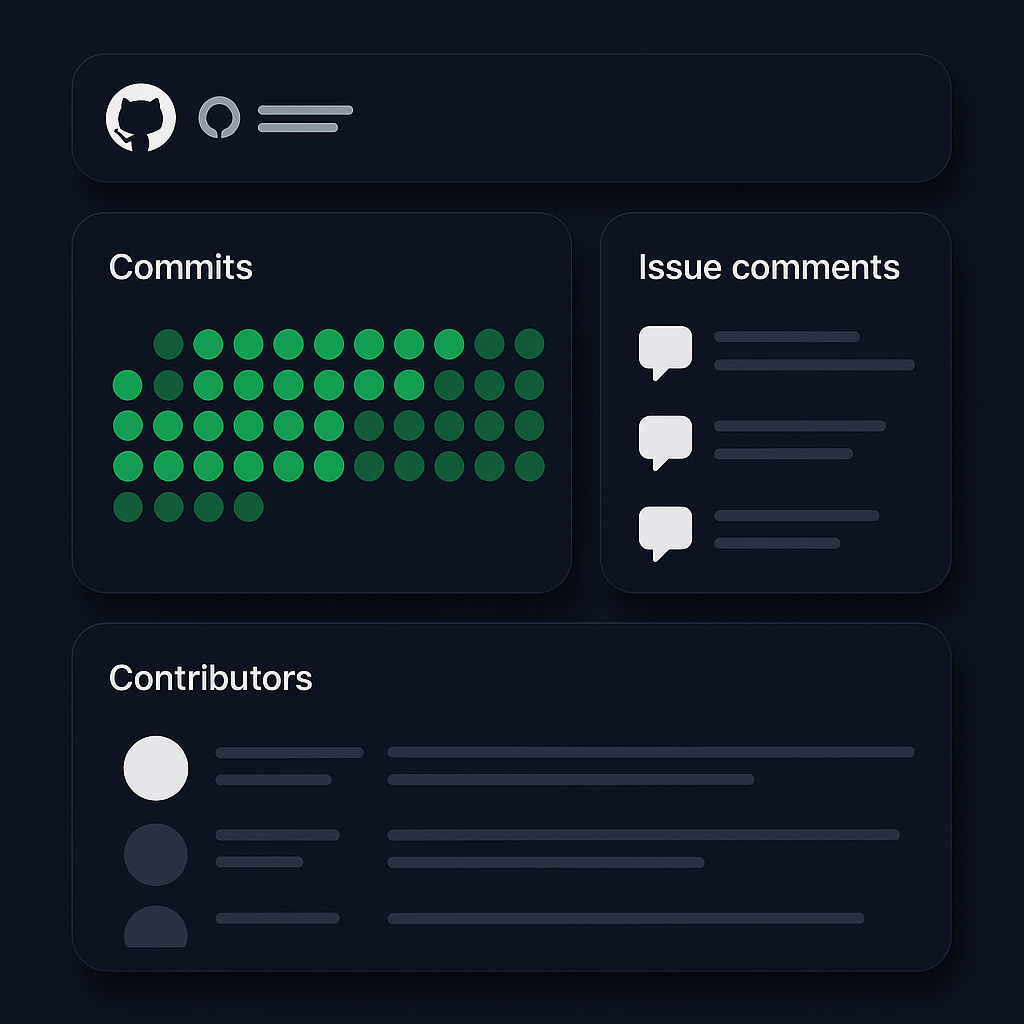
Open-source involvement can signal technical leadership and keeps skills sharp—many agencies publish their code on GitHub or contribute to projects you can review yourself. The Open Source Initiative notes that active participation in open-source projects often correlates with strong code quality and community reputation.
Open-Source Involvement
Seeing an agency’s commits or issue discussions in public GitHub repositories lets you gauge their coding practices, response times, and community standing firsthand.
Approach to Planning and Prototyping
A strong plan doesn’t guarantee success unless you can test ideas quickly.
How do you turn concepts into a working prototype or MVP?
What’s your average turnaround for an initial demo?
How do you validate features before full-scale development?
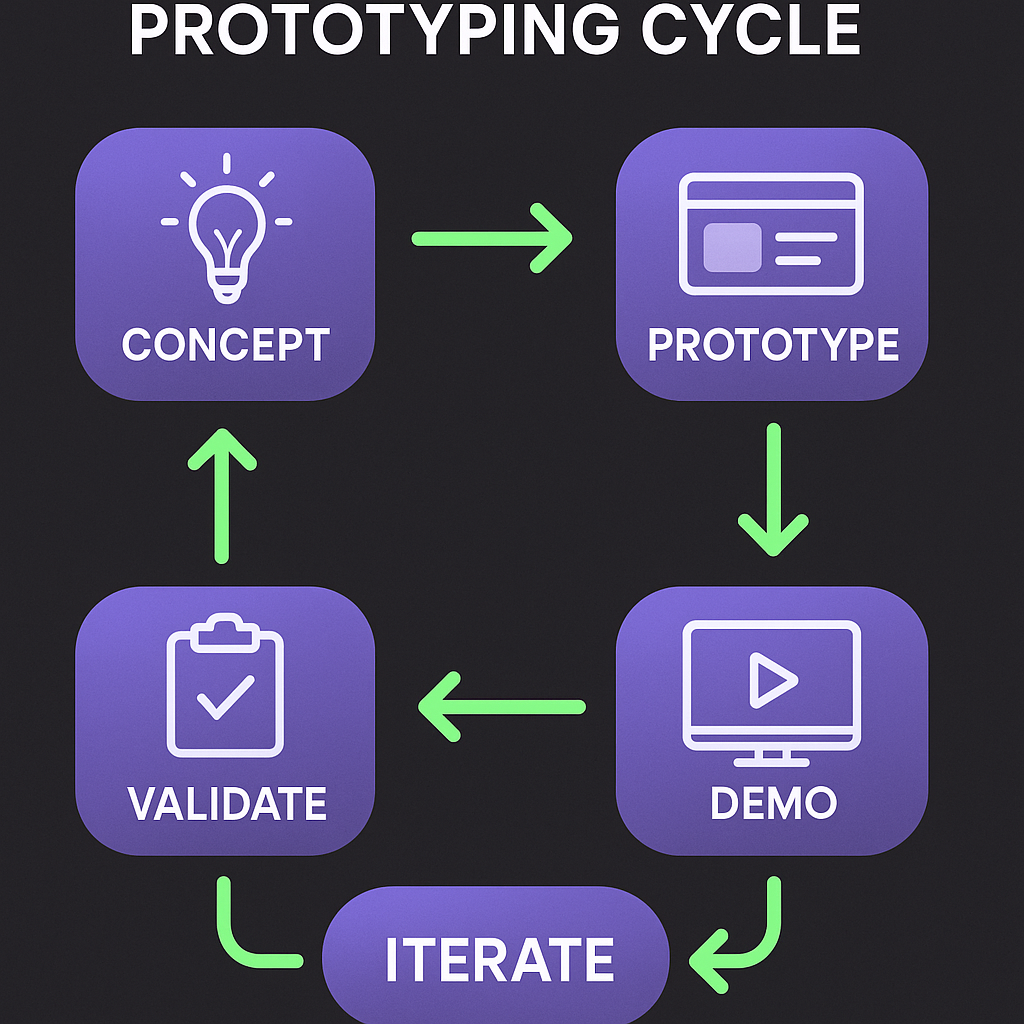
Rapid prototyping follows the Lean Startup principle of building a Minimum Viable Product (MVP) to test assumptions early, as outlined on the official Lean Startup website . This approach helps you identify user needs, gather feedback, and pivot before committing significant resources.
Project Management and Communication
Clear processes and regular updates keep surprises at bay.
Which project-management framework do you use—Scrum, Kanban, something else?
How often will we meet or get status reports?
Which tools do you use for issue tracking and code reviews?
How do you handle major pivots or scope changes?
When requirements shift, a good agency documents change requests, revises timelines, and outlines cost implications up front.
Handling Scope Changes
Ask for their formal change-control process: who approves it, how they estimate impact, and how they adjust contracts.
Technical Practices and Quality Assurance
The right technical habits mean fewer bugs and faster delivery.
What technology stack and frameworks do you favor?
Do you use continuous integration, automated testing, and infrastructure as code?
Can I access the code repository and CI pipelines during the project?
Have you integrated or modernized legacy systems before?
How do you ensure accessibility and inclusive design?
Practice | Benefits |
|---|---|
Technology stack and frameworks | Aligns tools with project requirements for optimal performance |
Continuous integration, automated testing, infrastructure as code | Ensures early bug detection and deployment reliability |
Code repository and CI pipeline access | Promotes transparency and faster feedback loops |
Legacy system integration or modernization | Facilitates seamless migration and interoperability |
Accessibility and inclusive design | Guarantees compliance and wider user reach |
Using CI/CD pipelines helps catch issues early and deploy more reliably, while automated tests ensure regressions are caught before they reach production.
Integrating Legacy Systems
Legacy modernization often involves wrapping old systems with APIs, refactoring modules, or migrating to microservices—best practices are summarized in IBM’s guide to legacy system modernization .
Ensuring Accessibility
Building to WCAG standards ensures your app is usable by people with a wide range of abilities and devices.
Security, Compliance, and Risk Management
Protecting your data and operations is non-negotiable.
What security protocols and data-protection measures do you follow?
Can you outline your disaster recovery and business-continuity plan?
Disaster recovery planning lays out steps to restore services after an incident, reducing downtime and data loss—best practices are detailed on Ready.gov’s business continuity page .
Support, Maintenance, and Handover
Your project doesn’t end at launch.
What post-launch support do you provide, and under what terms?
How do you transfer knowledge to our in-house team?
What onboarding process do you use for new stakeholders?
Effective knowledge transfer prevents information gaps when teams change; see the Chartered Institute of Personnel and Development’s insights on knowledge transfer .
Cost Structure and Legal Terms
Avoid billing surprises—be clear on money and ownership.
What’s your pricing model—time and materials, fixed bid, or retainer?
When are payments due, and what milestones trigger invoices?
Who owns the intellectual property and source code?
Can I see your standard contract and service-level agreement?
A transparent fee structure and clear IP terms protect both sides from future disputes.
Bringing It All Together
Choosing the right development agency means asking the right questions. You want proof of past success, a clear plan for how they’ll build and test your product, a transparent process for changes, robust technical and security practices, and smooth handover procedures. With this checklist, you’ll step into your partnership with confidence and clarity—ready to turn your vision into reality.
:format(webp))
:format(webp))
:format(webp))