:format(webp))
:format(webp))
Headless Shopify Unlocked: A Guide for Flagship Stores
Reading this will help you decide if a headless Shopify setup fits your flagship brand. You’ll learn what headless commerce is, its pros and cons, plus deeper insights on SEO, performance, security, global storefronts, experimentation, compliance and real-world success stories.
Traditional vs. Headless Commerce
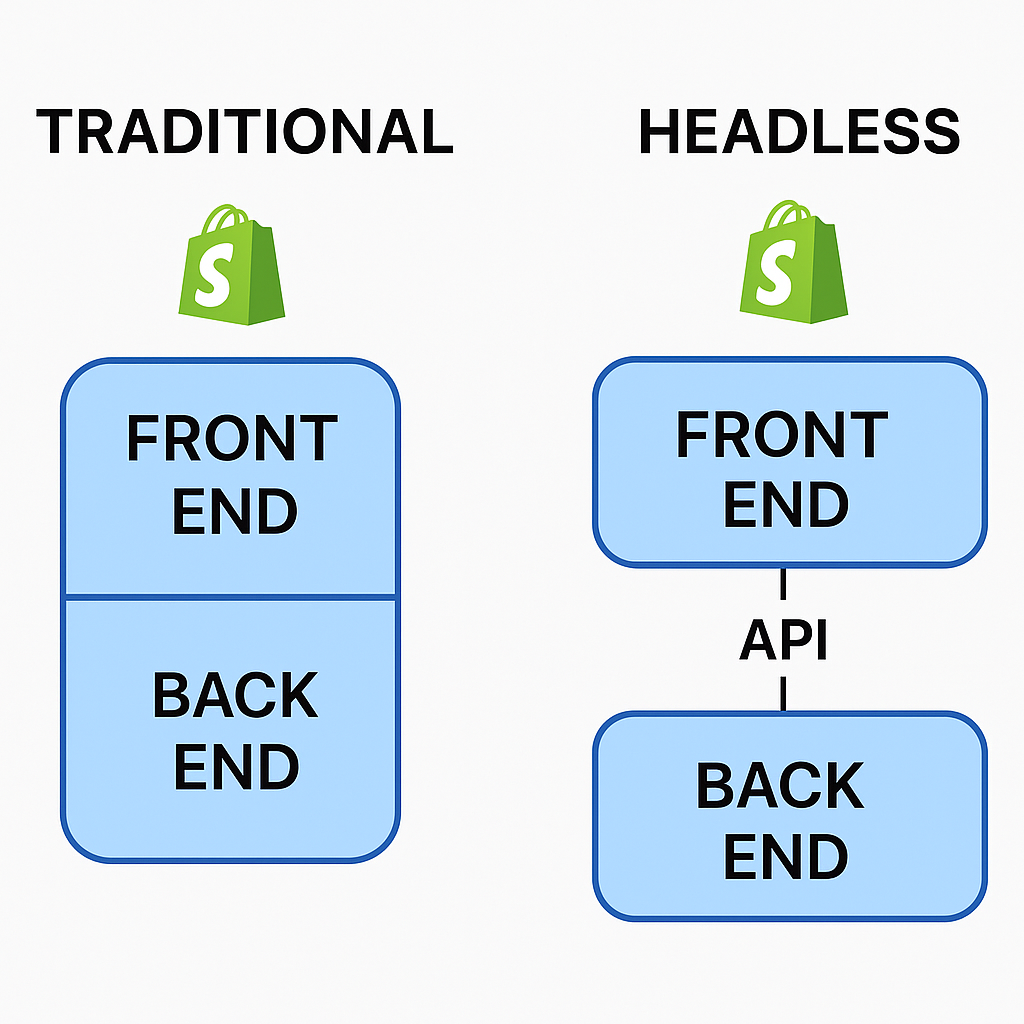
Traditional (monolithic) Shopify ties your front end and back end together, so design changes, new features or integrations often require work across the entire stack. Headless decouples the presentation layer (what customers see) from the e-commerce engine (Shopify’s back end), giving you flexibility to swap or update either side independently ( definition by Shopify ).
Core Advantages of Headless Shopify
Control Over Every Customer Touchpoint
With headless, you decide exactly how product pages, carts and checkout appear—on web, mobile, kiosk or IoT—without being restricted by a single template system ( headless commerce benefits ).
Freedom to Experiment with New Technologies
You can build your front end in React, Vue or another framework, then connect via Shopify’s Storefront API. That makes it easier to adopt AR/VR, voice shopping or other emerging interfaces ( Orenda Studios’ insights on headless Shopify ).
Omnichannel Experiences
Serve unified content across web, mobile app, in-store displays and social platforms, all managed from Shopify’s back end ( Scandiweb on headless commerce ).
Future-Proof Technology Stack
Since the front end lives separately, you can update frameworks or switch to a new CMS without rebuilding your entire commerce system.
Improved Site Performance
By leveraging static site generation or server-side rendering, you can deliver pages faster and reduce bounce rates. Google's benchmarks show that improving mobile page speed by just a second can significantly decrease abandonment ( Think With Google data ).
Advantage | Description | Example |
|---|---|---|
Control Over Touchpoint | Full control over how every part of your storefront looks and feels on any platform or device. | Design unique product pages, carts, and checkouts for web, mobile, kiosks, or IoT devices. |
Experimentation | Freedom to build using any front-end framework and easily try new technologies and interfaces. | Implement AR/VR or voice shopping via a React/Vue front end connected to Shopify’s Storefront API. |
Omnichannel | Deliver unified content and experiences across all digital and physical channels, managed from one backend. | Sync product info and promos seamlessly across web, app, in-store screens, and social media. |
Future-Proof Stack | Update or swap front-end frameworks or CMS platforms without disrupting your core commerce backend. | Switch from Vue to React, or migrate to a new CMS, without rebuilding your commerce system. |
Site Performance | Use modern rendering techniques for faster load times and reduced bounce rates, improving conversions. | Generate static or server-side rendered pages; faster mobile speeds lower abandonment rates. |
Technical Considerations and Challenges
Implementation Complexity & Costs
Headless requires specialized developers to connect APIs, manage build pipelines and maintain two infrastructures. Upfront costs and ongoing maintenance are higher compared to a standard Shopify theme.
SEO Challenges and Solutions
JavaScript-heavy front ends can hurt crawlability and indexation. To maintain rankings, implement server-side rendering (SSR) or Static Site Generation (SSG):
SSR with Next.js ( Next.js documentation )
SSG via frameworks like Astro
Security Considerations and Attack Surface
Splitting front and back ends shifts risk to APIs. You’ll need to secure API keys, enable OAuth, rate-limit requests and apply CORS rules. Regularly audit dependencies and use HTTPS everywhere ( Shopify OAuth guide ).
Challenge | Impact | Recommended Solution |
|---|---|---|
Implementation Complexity | Requires specialized developers; higher upfront and maintenance costs; managing dual infrastructures | Invest in experienced developers; budget for higher costs; plan infrastructure and maintenance proactively |
SEO Challenges | JavaScript-heavy front ends can reduce crawlability and indexation, risking lower rankings | Use server-side rendering (SSR) with Next.js or static site generation (SSG) frameworks like Astro to ensure SEO friendliness |
Security Considerations | Increased attack surface on APIs; risk of exposed keys, insecure endpoints, and vulnerable dependencies | Secure API keys, use OAuth, rate-limit requests, enforce CORS, audit dependencies regularly, and use HTTPS throughout |
Enhanced Capabilities Unique to Headless Shopify
Progressive Web App (PWA) Features
Turn your storefront into a PWA for app-like speed, offline browsing and push notifications—boosting engagement especially on mobile ( Introduction to PWAs ).
Internationalization & Localization at Scale
Serve multiple languages and currencies by routing to region-specific front ends, all pulling from a single Shopify back end. That ensures accurate pricing, tax rules and translations ( Headless commerce internationalization overview ).
Integration with Headless CMS and Content Orchestration
Combine Shopify with a headless CMS (e.g., Contentful, Prismic) to handle blogs, guides and campaign pages in one place, then publish to web, app or even IoT screens ( Contentful on headless commerce ).
Performance and Optimization Strategies
Advanced Caching and CDN Integration
Cache API responses at the edge (e.g., Cloudflare, Fastly) to reduce server load and speed up repeat visits ( Cloudflare caching guide ).
Edge Rendering
Render critical content at edge nodes rather than your origin server—cutting latency for global audiences ( Vercel edge functions ).
Real-World Impact
According to Google, a 100 ms improvement in load time can boost conversion by up to 10% ( Why performance matters ).
Experimentation and Future Flexibility
A/B Testing and Rapid Iterations
Headless lets you test UI variants via feature flags or deploy different front ends for cohorts—so you can measure what truly drives sales ( VWO A/B testing platform ).
Reducing Vendor Lock-In
Since your front end and back end are decoupled, you can swap Shopify for another commerce engine or replace your front-end framework without rebuilding both sides.
Accessibility and Compliance in Custom Storefronts
When you craft every element from scratch, you own the responsibility to meet WCAG 2.1 standards (e.g., ARIA labels, keyboard navigation) and GDPR or CCPA requirements. Regularly audits and using automated tools like axe-Core help maintain compliance ( WCAG 2.1 guidelines ).
Innovation in Action: Rebecca Minkoff’s Headless Leap
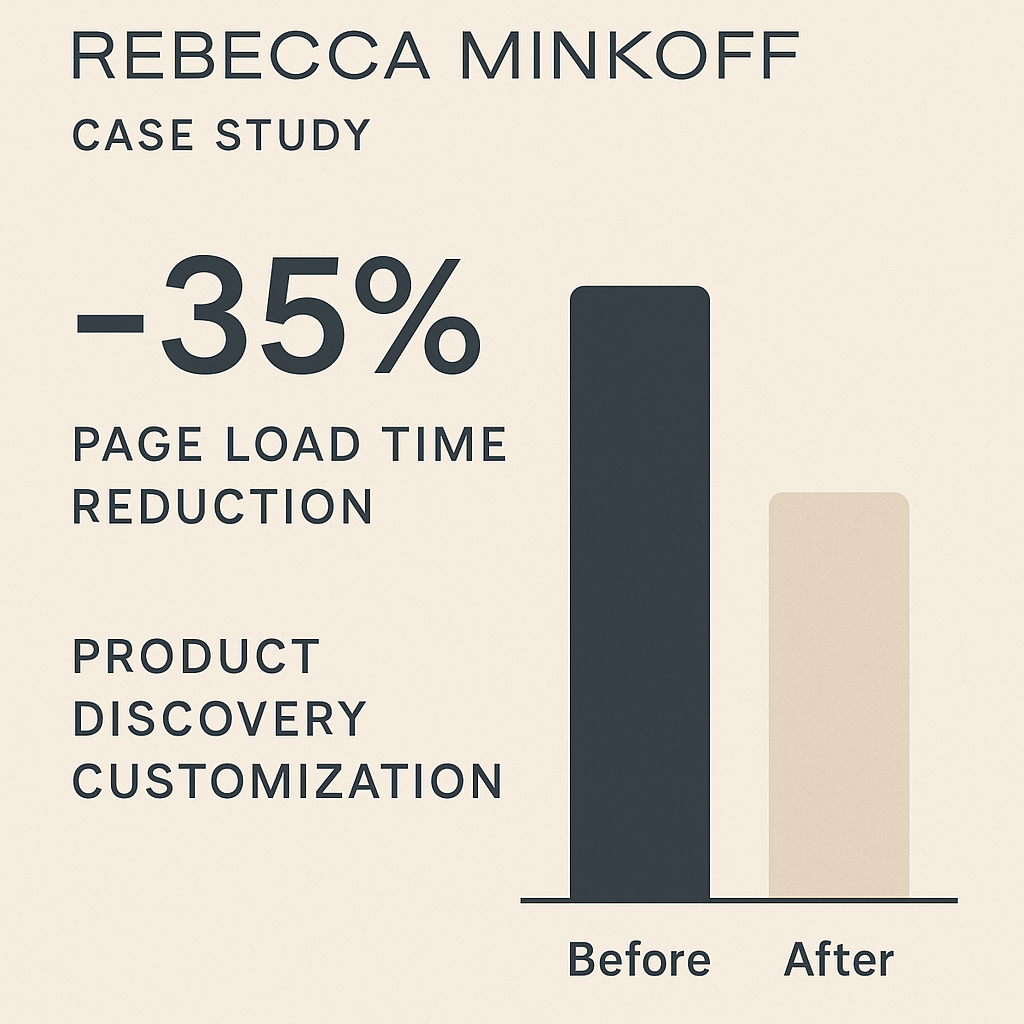
Fashion label Rebecca Minkoff rebuilt its store with a React front end on Shopify Plus, cutting page load time by over 35% and customizing product discovery for VIP shoppers ( Smashing Magazine case study ).
Your Next Move
By decoupling your storefront from Shopify’s back end, you gain full creative control, scalability and the ability to experiment—while shouldering extra complexity in development, SEO and security. If you have in-house expertise or the budget to partner with a specialized agency, headless Shopify can power a truly standout flagship experience. Otherwise, weigh the trade-offs carefully before taking the plunge.
:format(webp))
:format(webp))
:format(webp))