:format(webp))
:format(webp))
How Storyblok and ReactJS Supercharge Composable Commerce
In this article, you’ll discover how to build a flexible, scalable e-commerce storefront by combining Storyblok’s headless CMS with ReactJS . You’ll learn the core concepts of composable commerce, explore advanced features—like real-time visual editing, localization, performance tuning, and security best practices—and see how to launch, optimize, and evolve a next-generation store.
What Is Composable Commerce?
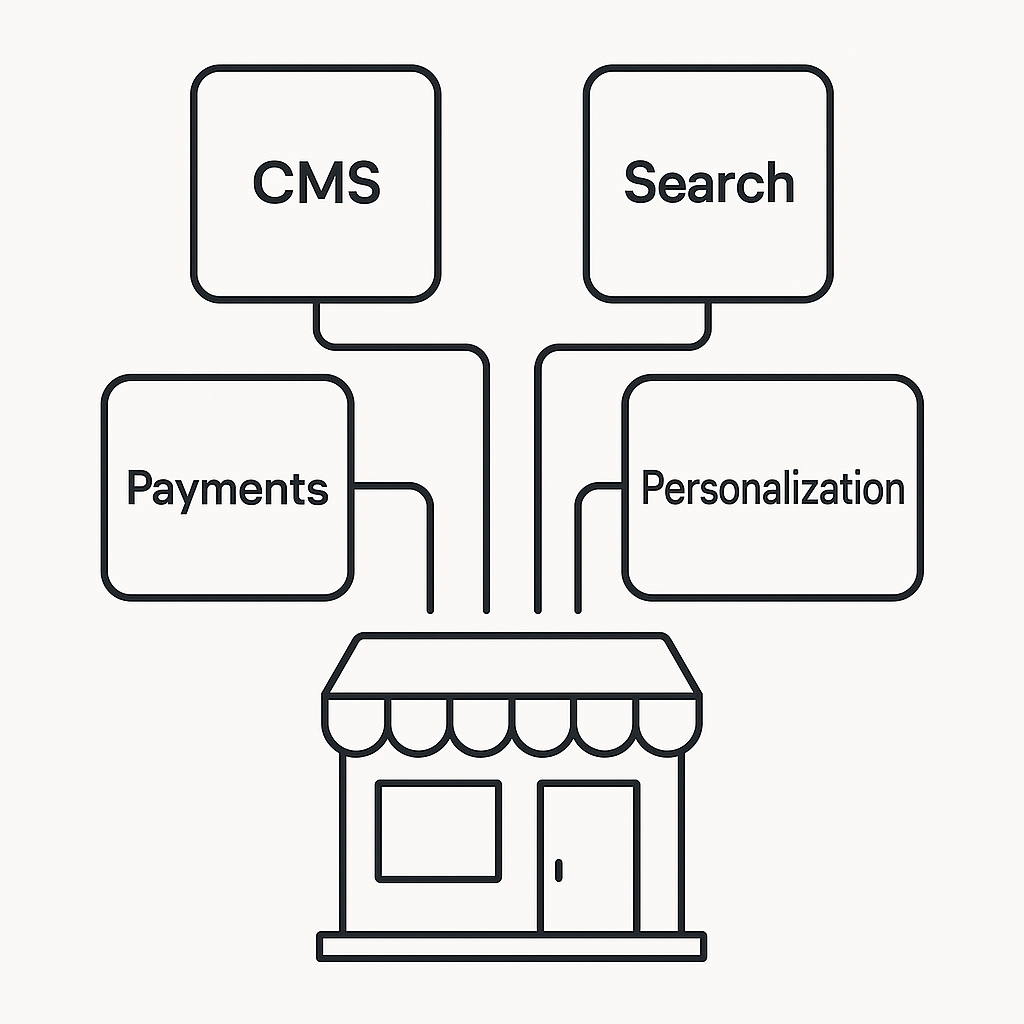
Composable commerce is an approach that lets you “mix and match” best-of-breed services—CMS, search, payments, personalization—into a unified storefront. Unlike monolithic platforms, a composable stack gives you:
Agility to swap out components
Flexibility to integrate new services
Scalability across channels
Faster time-to-market for features
Reduced vendor lock-in
According to commercetools, composable commerce “enables companies to drive digital innovation.”
Why Choose Storyblok and ReactJS for Your Storefront?
Storyblok is a headless CMS that delivers content via APIs , while ReactJS provides a component-driven framework to build dynamic UIs. Together they offer:
Agility & Innovation: Launch new campaigns without rewriting backends.
Scalability: Handle traffic peaks via static builds or edge caching.
Developer Experience: Reusable components and modern toolchains.
Content Editor Empowerment: Non-technical teams manage pages visually.
Feature | Storyblok Benefit | ReactJS Benefit |
|---|---|---|
Agility & Innovation | Instantly update content via APIs without backend changes | Rapidly build and deploy new UI features |
Scalability | Delivers content efficiently via CDN and edge caching | Supports static generation and server-side rendering |
Developer Experience | Simplifies content management and API integration | Component-based architecture with modern toolchains |
Content Editor Empowerment | Visual editor and workflows for non-technical users | Enables creation of customizable UI components |
Storyblok’s Visual Editor for ReactJS
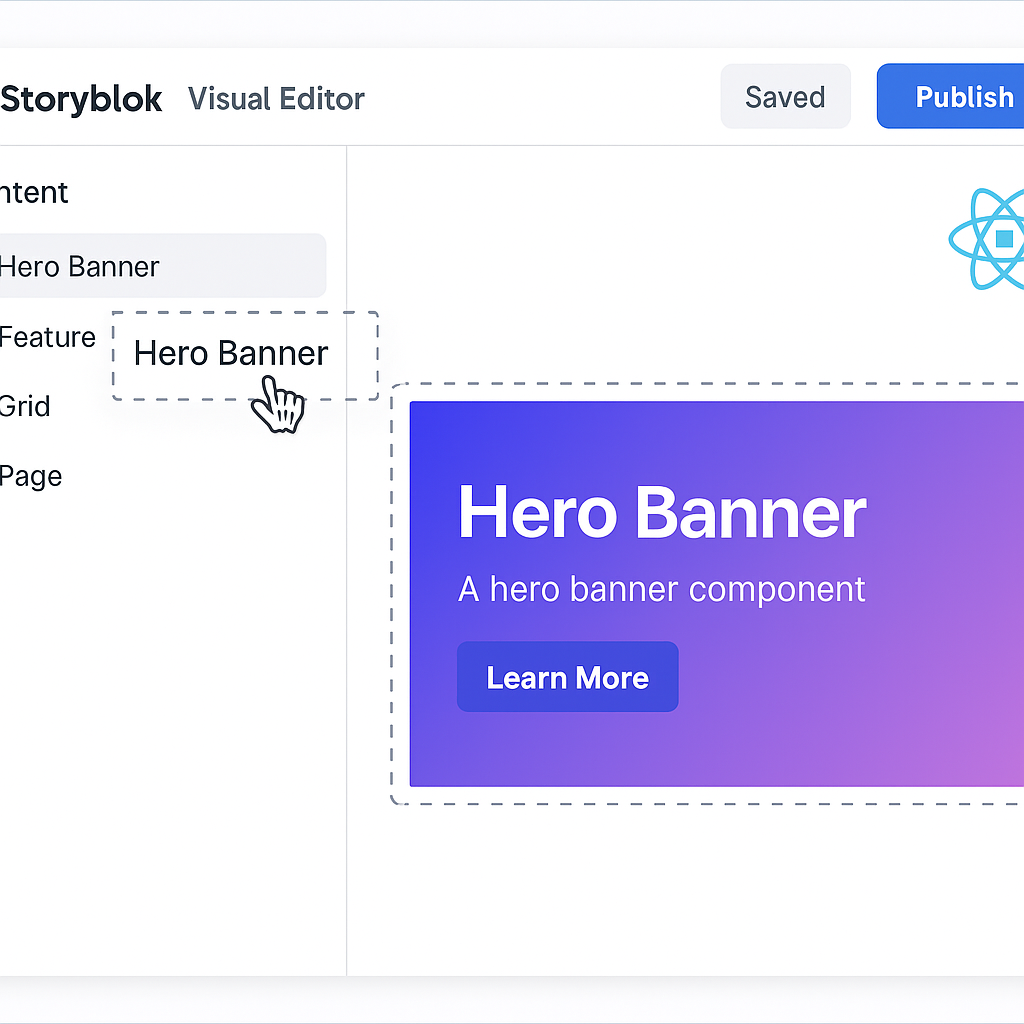
With Storyblok’s real-time visual editor, marketers can drag, drop, and preview content in a React-powered UI. You see exactly how components (e.g., hero banners, product teasers) render—no code deploy needed. This instant feedback loop cuts go-to-market time by up to 60% according to Storyblok’s user testimonials.
Localization & Multi-language Support
Storyblok lets you manage content variants per language or region. You can:
Define language fallbacks
Localize product descriptions, pricing, and assets
Maintain region-specific catalogs via content folders
Real-time Content Updates & Preview Mode
Editors can preview draft changes on your live storefront without redeploying. This instant feedback loop cuts go-to-market time by up to 60%.
Optimizing Performance and Security at Scale
A headless React store needs tuning to deliver pages fast and keep data safe.
Incremental Static Regeneration (ISR) & Edge Caching
Use Next.js ISR to rebuild only updated pages at runtime—blending static performance with dynamic freshness:
export async function getStaticProps() {

  // fetch Storyblok data

  return { props: { story }, revalidate: 60 };

}
Then deploy to Vercel’s edge network for global CDN caching.
Image Optimization via Storyblok Assets
Serve images with automatic resizing and WebP conversion. Storyblok’s Image Service lets you append parameters (`?width=800&format=webp`) to URLs for on-the-fly optimization.
API Security & Best Practices
Protect your preview and management API tokens—never expose them client-side.
Enforce CORS and rate limits.
Use signed URLs for asset delivery.
Monitor traffic patterns for abnormal API usage.
Practice | Description |
|---|---|
Token Protection | Keep preview and management API tokens secret; never expose them on the client side. |
CORS & Rate Limits | Enforce Cross-Origin Resource Sharing (CORS) policies and implement rate limits to prevent abuse. |
Signed URLs | Use signed URLs for secure asset delivery to control and validate requests. |
Traffic Monitoring | Monitor API traffic for unusual or abnormal usage patterns to detect potential security threats. |
Driving Growth with A/B Testing, SEO, and Design Systems
Beyond a fast, secure store, you’ll want to experiment, rank on search, and keep your brand consistent.
Implementing A/B Testing with Storyblok & React
Integrate tools like GrowthBook or Optimizely to swap React components or content blocks. You can:
Define experiment variants in Storyblok.
Use React hooks to toggle components.
Track conversions via analytics.
SEO Strategies for Headless React Setups
Use Server-Side Rendering (SSR) for key pages (product listings, blogs).
Generate XML sitemaps with dynamic queries to Storyblok by adhering to the Sitemap protocol .
Implement structured data ( JSON-LD ) for products and breadcrumbs.
Composable UI Patterns & Design Systems
Integrate your React components with Storybook for a shared design language. Storyblok’s component schema maps directly to your Storybook UI library, ensuring content editors use only approved layouts.
Migrating from Monolithic Platforms & Ensuring Accessibility
Thinking of a move from Shopify , Magento, or Adobe Commerce?
Phased Rollouts: Start with a landing page or blog before shifting checkout.
Data Portability: Export products, assets, and customer data via APIs or CSV.
Zero-Downtime: Use dual-stack deployments and feature flags.
Accessibility Compliance & Tooling
Aim for WCAG 2.1 AA standards . Use:
ESLint plugins (`jsx-a11y`) to catch missing alt text or ARIA roles.
Automated audits with Lighthouse or axe-core .
Storyblok content validation rules to enforce alt text.
A Real-World Success Story
Fashion retailer XYZ replaced their monolith with Storyblok + Next.js. They reduced page load times by 50%, increased editorial throughput by 3×, and saw a 12% uplift in conversions within three months.
Your Next Steps
You now understand how Storyblok and ReactJS form a composable commerce powerhouse—from core definitions to advanced workflows. Start by:
Signing up for a free Storyblok account.
Spinning up a Next.js starter project.
Connecting your commerce API (Shopify, BigCommerce, etc.).
Building your first visual block and testing preview mode.
Ready to launch a flexible, performant storefront? Let your team delight customers worldwide.
:format(webp))
:format(webp))
:format(webp))