:format(webp))
:format(webp))
What’s Next for WebAssembly: The Road to WASM 3.0 and Beyond
When you dive into this article, you’ll discover the key features that are about to land in WebAssembly 3.0, understand how it’s expanding beyond the browser, and learn about real-world hurdles and security trends. By the end, you’ll have a clear view of where WASM is heading—and how you can take advantage of its latest advances.
Stage 4 Proposals on the Brink of Standardization
Stage 4 marks the final step before a proposal becomes part of the core specification. In the next WebAssembly release, you can expect:
Fixed-width SIMD for faster numeric and vector operations
Tail-call optimization to streamline recursive functions
Improved reference types for safer cross-module calls
Proposal | Feature | Benefit |
|---|---|---|
Fixed-width SIMD | Numeric & vector ops | Improved performance on math-heavy workloads |
Tail-call optimization | Recursive calls | Reduced stack usage and faster function recursion |
Improved reference types | Cross-module calls | Enhanced safety and fewer runtime errors |
All of these aim to squeeze more speed and reliability out of your modules. You can track each proposal’s progress on the official WebAssembly proposals page .
Native Garbage Collection Integration
For years, lack of GC support forced languages like Java and C# into workarounds. With the WebAssembly GC proposal entering Stage 4 , WASM 3.0 will let these languages manage memory natively, cutting down on overhead and boosting interoperability.
Advancements in Parallelism and Shared Memory
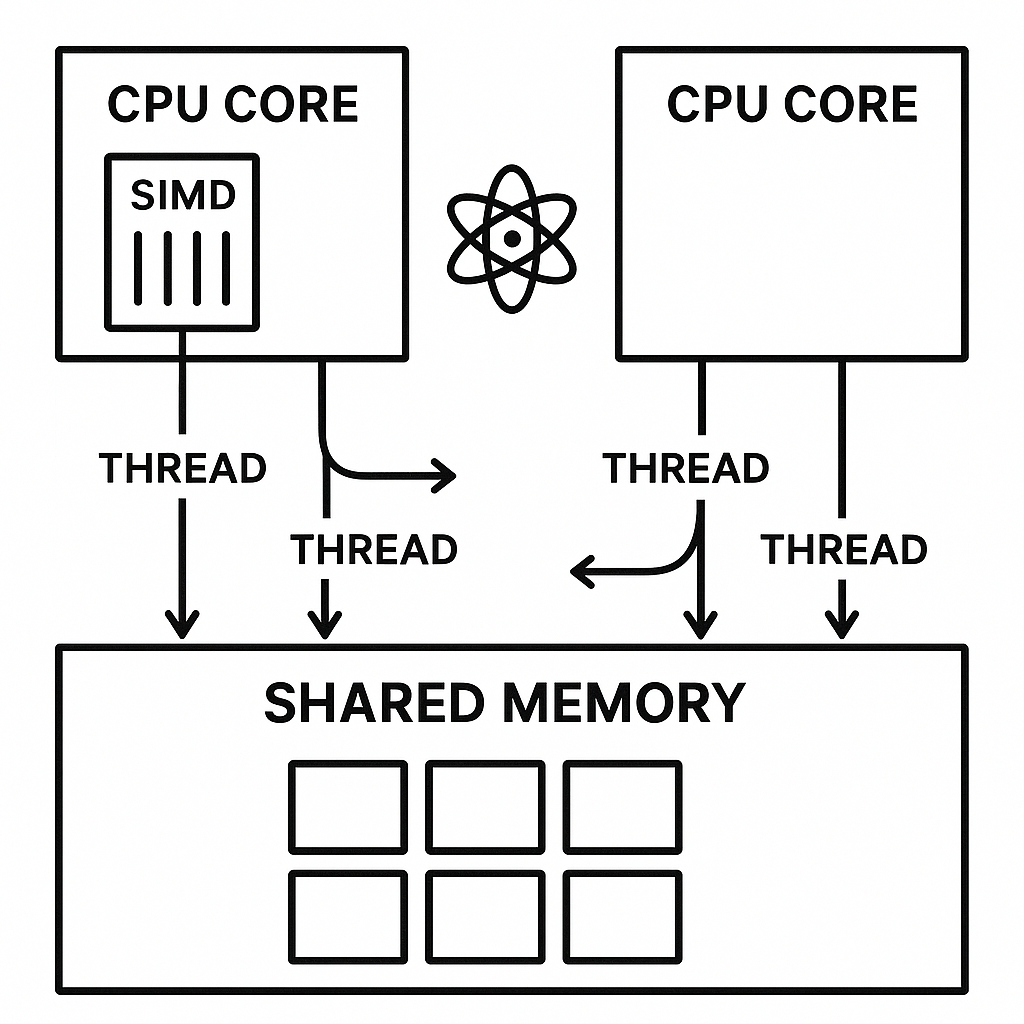
High-performance applications thrive on multiple cores. WASM’s thread proposal —now at Stage 3—adds robust shared memory and atomic operations, so you can run parallel workloads without fear of data races. Combined with SIMD, this paves the way for compute-heavy tasks in the browser and beyond.
Expanding the Component Model and Developer Tooling
The emerging component model standardizes how modules talk to each other, regardless of language. That means you can compose a Rust data-parser, a Go business-logic layer, and a C++ crypto engine into one seamless application.
While that’s unfolding, toolchains are getting friendlier too. Recent updates include:
Better DWARF debugging support
Improved source-map generation
Faster incremental builds
According to the WebAssembly 2023 tooling report , these enhancements can cut debugging time by up to 40%.
Pushing WebAssembly Beyond the Browser
WASI (WebAssembly System Interface) has matured into a lightweight runtime for servers, edge nodes, and even IoT devices. Today, you’ll find WASM-based microservices running on cloud-native platforms and edge routers alike. Major cloud providers now offer WASM runtimes alongside containers.
Edge AI and In-Browser Machine Learning
Projects like Candle demonstrate near-native inference speeds right in the browser or at the network edge. This removes the round-trip to a remote server, slashing latency for real-time AI applications.
Integrations with JavaScript Frameworks
React and Vue.js are shipping APIs to load and call WASM modules directly. You can delegate image processing or complex number crunching to a Rust or C++ module, then update your UI with the result—no context-switch required.
Security Landscape: Sandboxing and Malware Trends
WebAssembly’s sandbox model remains a strong defense, but its compact binary format also attracted obfuscated malware and cryptojacking scripts. According to the Palo Alto Networks’ Unit42 report , WebAssembly-based cryptojacking attempts fell by 25% in 2023 as detection tools improved. Still, staying on top of security patches is critical.
Memory Limits and Real-World Performance Trade-Offs
On desktop browsers, you can allocate gigabytes of linear memory . Mobile browsers, however, often cap allocations around 300 MB—beyond that, instantiation can fail without warning. And while SIMD and threads promise big wins, some benchmarks show only modest gains over highly optimized JavaScript, thanks to advanced JITs and direct DOM access in JS engines.
A Glimpse at the WASM 3.0 Ecosystem
Here are the standout trends you’ll see over the next year:
Broad support for native garbage collection
Full Stage 4 approval of multi-threading and SIMD
Further refinement of the component model for polyglot apps
Continued expansion of WASI into server, edge, and IoT realms
Deeper integration with React, Vue, and other frameworks
More in-browser AI and edge-compute use cases
Trend | Description |
|---|---|
Native GC | Languages manage memory |
Multi-threading & SIMD | Parallel performance |
Component model | Polyglot composition |
WASI expansion | New runtimes |
Framework integration | React/Vue APIs |
AI & edge compute | Real-time inferencing |
Charting the WASM Horizon
WebAssembly has already reshaped the way you build high-performance web and cloud applications. With native GC, richer threading, standard modules, and ever-expanding runtimes, it’s on track to become a universal compilation target. If you haven’t experimented with WASM in your next project, now is the time to explore its evolving landscape—your users will thank you for the speed, security, and flexibility.
:format(webp))
:format(webp))
:format(webp))