:format(webp))
:format(webp))
The next generation of JavaScript build tools: Vite, Turbopack, Bun — and what’s really changing
Read this and you'll leave with a clear sense of why modern bundlers look different, which tool fits which workflow, and a few low-level technical shifts that rarely make headlines but will shape the next years of frontend tooling.
Why the build tool landscape is finally shifting
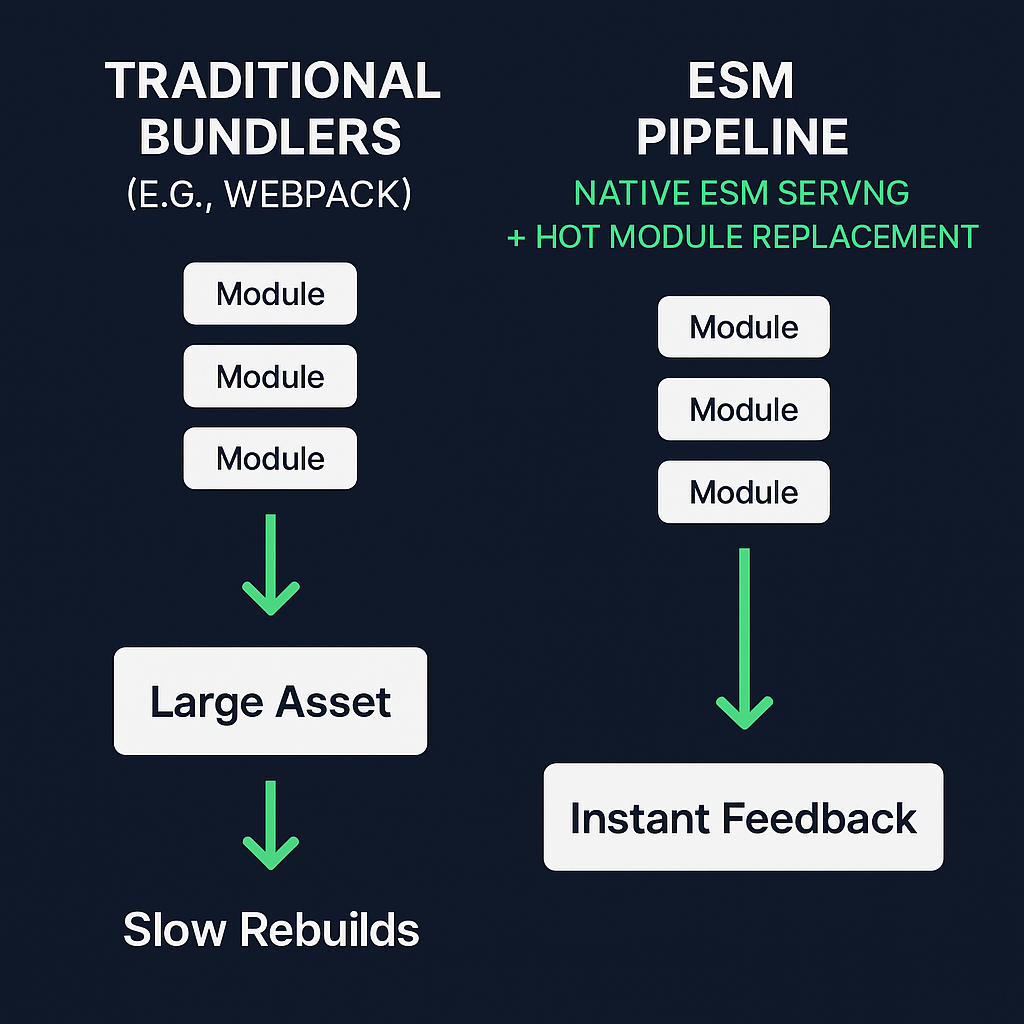
For a long time Webpack dominated by solving a real problem: shipping many JS modules as a small number of assets for browsers ( Webpack’s official concepts guide ). But as apps grew, that approach hit practical limits — slow cold builds, sluggish dev servers, and complex config that got in the way of iteration.
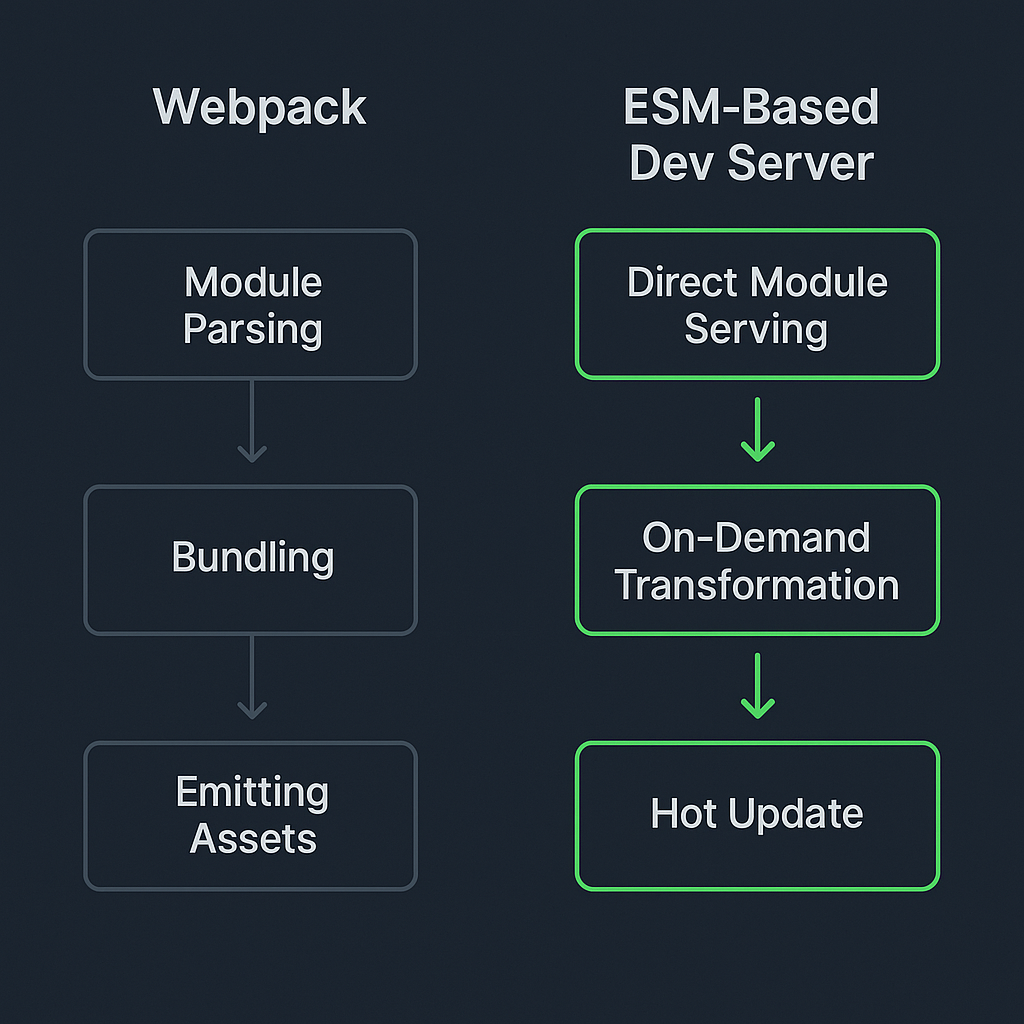
At the same time, browsers standardized ES Modules (ESM), which unlocked a different strategy: use the browser’s native module loader in development and only bundle aggressively for production ( MDN’s guide to JavaScript modules ).
Those two forces — scale and ESM — plus a renewed focus on developer experience and runtime performance are driving new tools like Vite, Turbopack, and Bun to rethink the fundamentals of build pipelines.
Vite: instant dev feedback by leaning on ESM
Vite made a splash by treating the development server and bundler as separate problems. In dev, it serves native ESM and transforms modules on demand, giving near-instant hot updates. For production builds it uses fast native toolchains (esbuild, Rollup) as needed ( Vite documentation ).
Why that matters: you edit a file, only that module (and dependents) are reloaded instead of rebuilding a big graph, so the feedback loop is much faster.
Turbopack: replacing slow whole-graph rebuilds with Rust-powered incremental work
Turbopack is Vercel’s effort to succeed Webpack where scale matters. It’s implemented in Rust and focuses on incremental compilation and smart caching so unchanged code paths aren’t reprocessed on every change.
Vercel’s initial benchmarks showed large improvements in cold-start and rebuild times compared with older bundlers in Next.js scenarios.
Bun: a runtime-first, all-in-one toolchain written in Zig
Bun is a JavaScript runtime, package manager, bundler and test runner in one project. Built with Zig, it aims for native-level throughput (faster installs, faster script startup) while replacing multiple Node.js tools in many workflows ( Bun homepage ). Coverage of Bun highlights its ambition to be a drop-in replacement for parts of the Node ecosystem while shaving significant time off common operations.
Practical note: Bun’s scope (runtime + tooling) means you can often skip configuring several separate tools, but the ecosystem and compatibility surface are still evolving — consider your dependencies before switching.
Tool | Primary Language | Key Use Case | Dev Server Speed | Build Engine |
|---|---|---|---|---|
Vite | JS/TS (esbuild/Rollup) | Instant ESM dev, near-instant hot updates | Near-instant hot updates | esbuild + Rollup |
Turbopack | Rust | Large-scale incremental builds | Fast cold start & rebuild | Custom Rust engine |
Bun | Zig | Integrated runtime & tooling | Ultra-fast installs & startup | Bun’s native toolchain |
Under the hood: three lower-level shifts you should know about
Incremental parsing and partial AST reuse
Next-gen tools increasingly avoid full reparses of unchanged files. Rather than just caching build outputs, systems like SWC and Turbopack aim to reuse parsed AST fragments and only reprocess altered parts of the module graph, which reduces CPU work and memory churn during hot updates.
The result: faster incremental builds and less time wasted on IO and parsing for large codebases.
Memory layout and zero-copy techniques made possible by Zig and Rust
Languages like Zig (used by Bun) and Rust (used by Turbopack, SWC) let tooling control memory layout directly — arena allocators, pool allocation, and zero-copy string handling are easier to implement than in JS-based tools. That gives lower-level tools meaningful throughput and latency wins when processing millions of characters of source and huge dependency graphs ( Zig’s memory allocation guide ).
Put simply: native languages let bundlers process more data with fewer allocations and less copying, which translates to measurable speed improvements.
WebAssembly component model and cross-language plugin ecosystems
WebAssembly’s interface types and the component model are paving the way for safely running plugins written in different languages inside the same process. That means future bundlers can host high-speed, language-specific plugins (Rust, Zig, Go) without the cost and isolation complexity of separate processes.
Why it matters: plugin ecosystems will be able to combine safety and speed, letting authors write performance-sensitive transforms in native languages while keeping the overall system robust.
The monorepo and “buildless” trends: less orchestration, more project graph awareness
Some modern tools are evolving to treat multi-package repos as a first-class scenario. Bun supports workspace-style installs and caching that are friendly to monorepos. Other projects (including new-format tools and language servers) embed project graph inference and cross-package caching so you don’t need an external orchestrator just to get consistent fast builds ( Biome on npm ).
At the same time, a quiet trend toward “buildless” or framework-centric workflows has emerged: frameworks such as Next.js (App Router), SvelteKit, and Fresh focus the developer on routing, data loading and runtime semantics while treating bundling as an implementation detail you rarely touch ( Next.js App Router docs , SvelteKit documentation , Fresh framework guide ). The net effect: your code’s runtime model and developer ergonomics gain priority over tuning low-level bundler options.
How to choose
If you want instant dev iteration and simple setup: try Vite.
If you run very large Next.js apps and need incremental build scale: evaluate Turbopack in your CI and dev workflows.
If you want an integrated runtime and ultra-fast installs: experiment with Bun in non-critical projects first to assess compatibility.
For monorepos, look for tools that embed project-graph awareness and cross-package caching.
If your team prioritizes routing, server semantics, or edge-first deploys, evaluate framework-first approaches where the bundler is mostly invisible.
What the next year likely looks like
Expect continued convergence: more native-language components (Rust/Zig), incremental and partial-reuse compilation strategies, and tighter monorepo tooling. WebAssembly’s component model could standardize cross-language plugin boundaries, and frameworks will keep making bundlers an implementation detail so you spend time on features and UX instead of config.
Think of it as a change in emphasis: we’re moving from “how do I make Webpack do X?” to “what runtime and developer model do I want?” and then letting the tooling rewire itself to deliver that experience.
The parting map
Use this page as a quick reference when you evaluate tools:
Vite — best for fast dev iteration via native ESM.
Turbopack — built for scale and incremental work in large apps, especially Next.js.
Bun — a bold all-in-one runtime/toolchain with native-language performance.
Framework-first options — when you want routing and data semantics to dominate your design, not bundler configs.
:format(webp))
:format(webp))
:format(webp))