:format(webp))
:format(webp))
How to Streamline and Future-Proof Your Marketing Tech Stack
When you finish reading this, you’ll know how to align your tools with strategic goals, eliminate wasteful overlap, secure your data, tap into AI-driven automation, and keep your stack flexible—while also considering environmental impact and vendor dynamics.
Set Clear Goals and KPIs
Before you add or remove any tool, tie every component of your stack to specific business outcomes.
Define metrics you care about (e.g., lead-to-customer rate, cost per acquisition).
Assign each tool to at least one KPI.
Review goal alignment quarterly.
Metric | Definition | Sample KPI Target | Tool Example |
|---|---|---|---|
Lead-to-Customer Rate | Percentage of leads converted to customers | 5% monthly | ExampleTool |
Cost per Acquisition | Cost to acquire a customer | $50 | AcquisitionTool |
Customer Churn Rate | Percentage of customers lost over a period | <3% quarterly | RetainSuite |
Average Deal Size | Average revenue per closed deal | $1,000 | SalesTracker |
Website Conversion Rate | Percentage of website visitors who take action | 8% monthly | WebAnalyticsPro |
“Marketing without data is like driving with your eyes closed.” — Dan Zarrella
Conduct a Thorough Audit
Understanding what you already have is step one.
List every tool in use.
Map each to the marketing activity it supports.
Identify gaps where no tool exists and overlaps where multiple tools serve the same function.
Rate each tool on cost, usage, and performance.
Tool Name | Marketing Activity | Cost (USD/month) | Usage Level | Performance Rating (1-5) |
|---|---|---|---|---|
HubSpot | Email Marketing | $800 | High | 4 |
Google Analytics | Analytics | $0 | High | 5 |
Slack | Collaboration | $200 | Medium | 3 |
Hootsuite | Social Media Management | $150 | Medium | 4 |
Canva | Content Creation | $13 | High | 5 |
Mailchimp | Email Marketing | $300 | Low | 3 |
The Hidden Environmental Cost
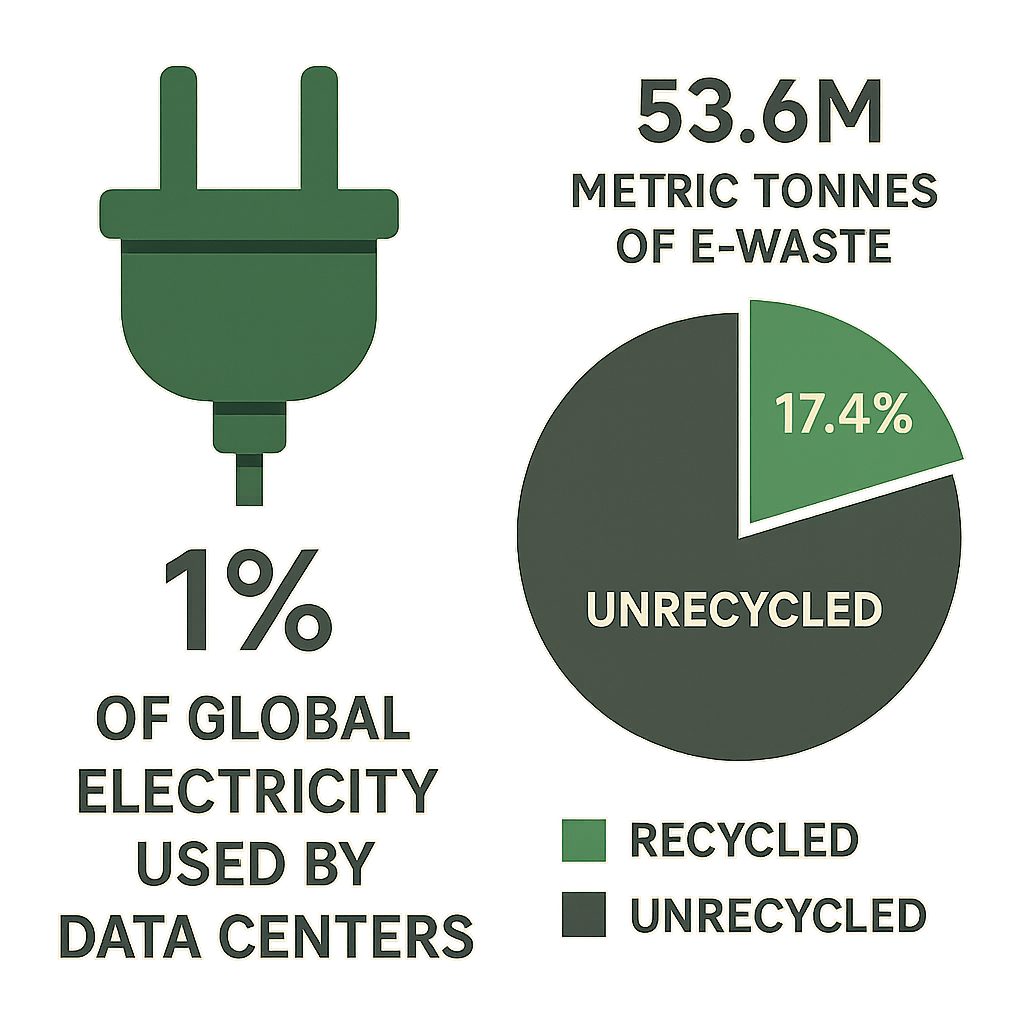
When redundant or outdated systems stay online, they draw power—data centers alone consume about 1% of global electricity—and eventually become electronic waste. In 2019, the world generated 53.6 million metric tonnes of e-waste—only 17.4% was formally recycled. Trimming unused tools isn’t just good for budgets; it helps reduce carbon footprints and landfill waste.
Prioritize Integration for Seamless Data Flow
Your stack only works as well as its weakest link. Break down silos by:
Choosing platforms with open APIs.
Implementing middleware or integration platform as a service (iPaaS) to connect disparate systems.
Automating data syncs to maintain a single source of truth.
Locking Down Security and Privacy
As you integrate systems, you increase your attack surface. Keep data safe by:
Encrypting data both at rest and in transit.
Building role-based access controls.
Ensuring compliance with GDPR, CCPA, or other regional regulations.
Leverage AI and Machine Learning
Automation can predict customer behavior and personalize campaigns at scale.
Use predictive analytics to forecast churn or upsell opportunities.
Deploy machine-learning models for dynamic ad targeting.
Continuously train algorithms on fresh data for accuracy.
According to a 2022 survey, 72% of marketers say AI improves customer insights and segmentation.

Balance Vendor Management and Flexibility
Relying too heavily on a single provider can lead to lock-in and reduced bargaining power.
Negotiate contract terms that allow scaling up or down.
Maintain at least one open-source alternative for critical functions.
Periodically benchmark vendor costs and performance.
Open-source tools like Mautic (marketing automation) or Matomo (analytics) can cover core needs while giving you full data control.
Empower Your Team and Establish Governance
A sophisticated stack means nothing if your team can’t use it.
Conduct hands-on workshops and create how-to guides.
Define governance—roles, approval workflows, and documentation standards.
Set up a regular review cycle: assess tool usage, retire underperformers, and pilot new solutions.
Iterate Based on Metrics
Monitor key indicators such as tool adoption rate, campaign ROI, and system uptime. Use these insights to refine your stack every six months.
The Road Ahead
You now have a blueprint for a lean, secure, data-driven marketing technology stack. By aligning tools to goals, auditing usage, integrating thoughtfully, harnessing AI, navigating vendor relationships, and empowering your team, you’ll build a stack that not only serves today’s needs but also adapts to tomorrow’s challenges.
:format(webp))
:format(webp))
:format(webp))