:format(webp))
:format(webp))
Good Code Is Invisible: The Hidden Power of Clear Code
By the time you finish this article, you’ll understand why code that “disappears” in day-to-day work isn’t just tidy—it boosts team morale, cuts security risks, makes onboarding easier, and even speeds up performance.

Readability and Clarity
Readable code feels like plain English. When you or a teammate glance at a function, its purpose should jump out without guesswork.
According to the JetBrains 2023 Developer Survey , 43% of developers rank readability as the top factor in code quality.
Clarity of intent reduces errors during refactoring and accelerates debugging.
Why clarity matters
Every extra mental step you take to decode obscure variable names or nested logic adds to your cognitive load . Clear code hands you straightforward logic, so you spend time solving problems—not deciphering them.
Simplicity and Focus
Simplicity means keeping surprises to a minimum. You aim for the smallest number of moving parts that still solve the task.
Fewer abstractions lower the chance of hidden interactions.
Simple code often proves easier to optimize later.

“The simplest solution often turns out to be the one with the fewest hidden traps.” – Kent Beck
Maintainability and Adaptability
Good code anticipates change. Files and modules should follow consistent patterns so adapting to new requirements feels routine, not revolutionary.
Consistent naming and structure let you predict where to add features or fix bugs.
Modular design fosters reuse in other parts of the system.
Anticipating future needs
When your codebase grows, clear boundaries and predictable patterns mean you avoid tangled dependencies. That saves hours when you roll out the next feature.
Testability and Reliability
Well-tested code doesn’t just pass unit tests—it makes test additions painless.
High test coverage correlates with fewer post-release defects, as highlighted in the Accelerate State of DevOps Report 2019 .
Tests serve as living documentation , confirming how modules interact.
Documentation and Standards
Lightweight comments should explain why, not what. If your code is clear enough, comments only cover the intent or edge-case rationale.
Adhering to coding standards ensures every team member writes in the same style.
A shared style guide cuts friction in code reviews.
Collaboration, Onboarding, and Reviews
Invisible code accelerates teamwork. When everyone follows the same patterns, new joiners ramp up in days instead of weeks.
Effective onboarding boosts employee retention by 82% according to BambooHR.
Software inspections detect up to 90% of defects in a module when applied rigorously.
Formal peer review processes, such as those outlined in the SmartBear State of Code Review 2020 Report, make feedback loops quicker and more constructive.
Metric | Percentage | Source |
|---|---|---|
Employee Retention | 82% | BambooHR |
Defects Detected | 90% | CMMI Institute |
Faster Feedback Loops | Qualitative improvement | SmartBear 2020 |
Security and Performance
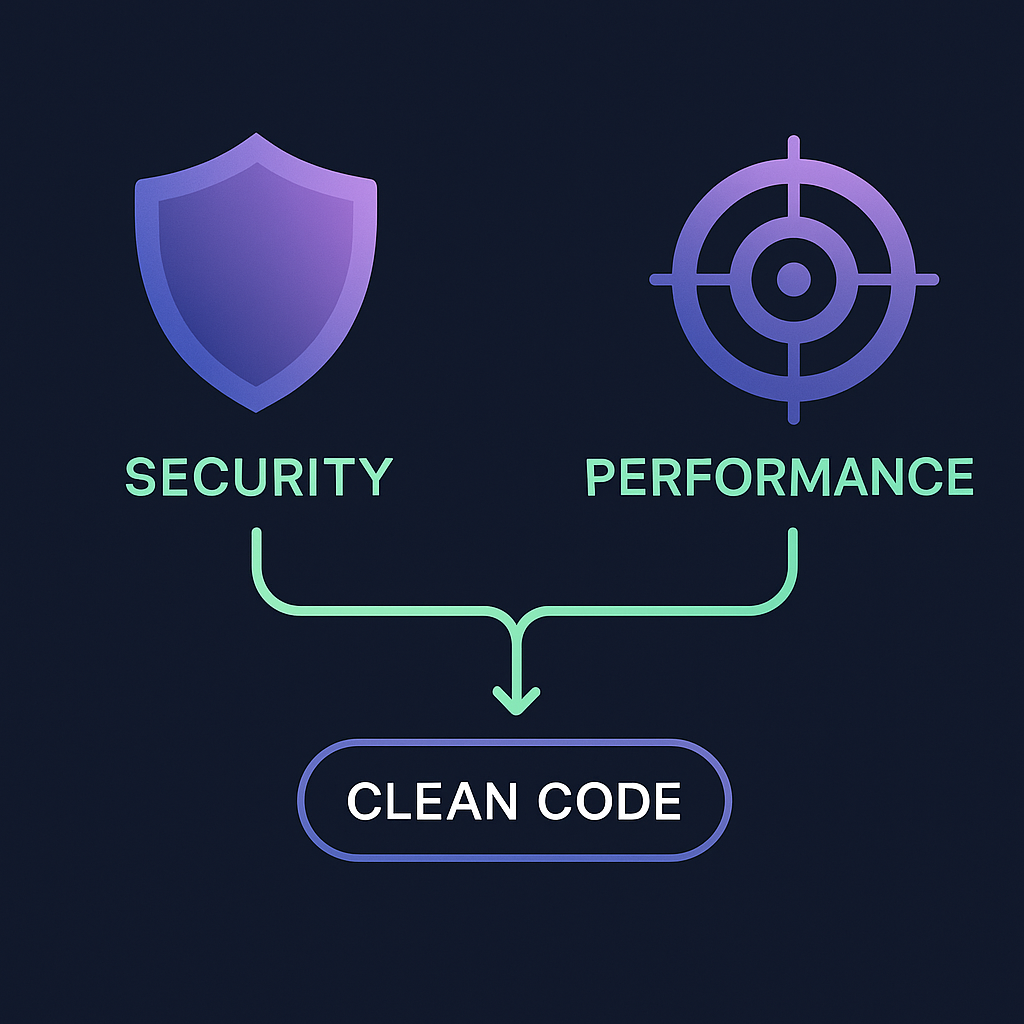
Clear, predictable code shrinks the attack surface. When logic flows plainly, security audits flag fewer blind spots.
The OWASP Top 10 vulnerabilities often arise from unpredictable control flows or hidden logic.
Simplicity aids profiling: straightforward loops and data structures make hotspots obvious, so you can optimize where it counts, thanks to clear time complexity analysis.
Developer Well-Being and Cognitive Load
Invisible code lightens your mental overhead. Every time you avoid puzzling through clever tricks, you conserve mental energy—cutting developer fatigue and burnout.
Cognitive load theory shows that reducing extraneous complexity improves problem-solving capacity.
Less “brain gymnastics” in code means happier, more focused engineers.
The Invisible Hand
When code seamlessly fits into your workflow, you spend less time wrestling with the framework and more time innovating. Invisible code isn’t a gimmick—it’s the silent engine that drives teams forward, makes systems safer, and turns new hires into productive contributors almost overnight.
:format(webp))
:format(webp))
:format(webp))