:format(webp))
:format(webp))
Mastering React Server Actions: The Future of Data Mutations
By the end of this article, you’ll understand how React Server Actions work, why they’re rewriting the rules for data mutations, and how to extend them with custom hooks, error handling patterns, and third-party integrations.
What Are React Server Actions?
React Server Actions are asynchronous functions that live and run on the server. You define them by placing "use server" at the top of your function file, then call them directly from Server or Client Components without writing separate API routes. For full details, see the Next.js Data and Mutations documentation .
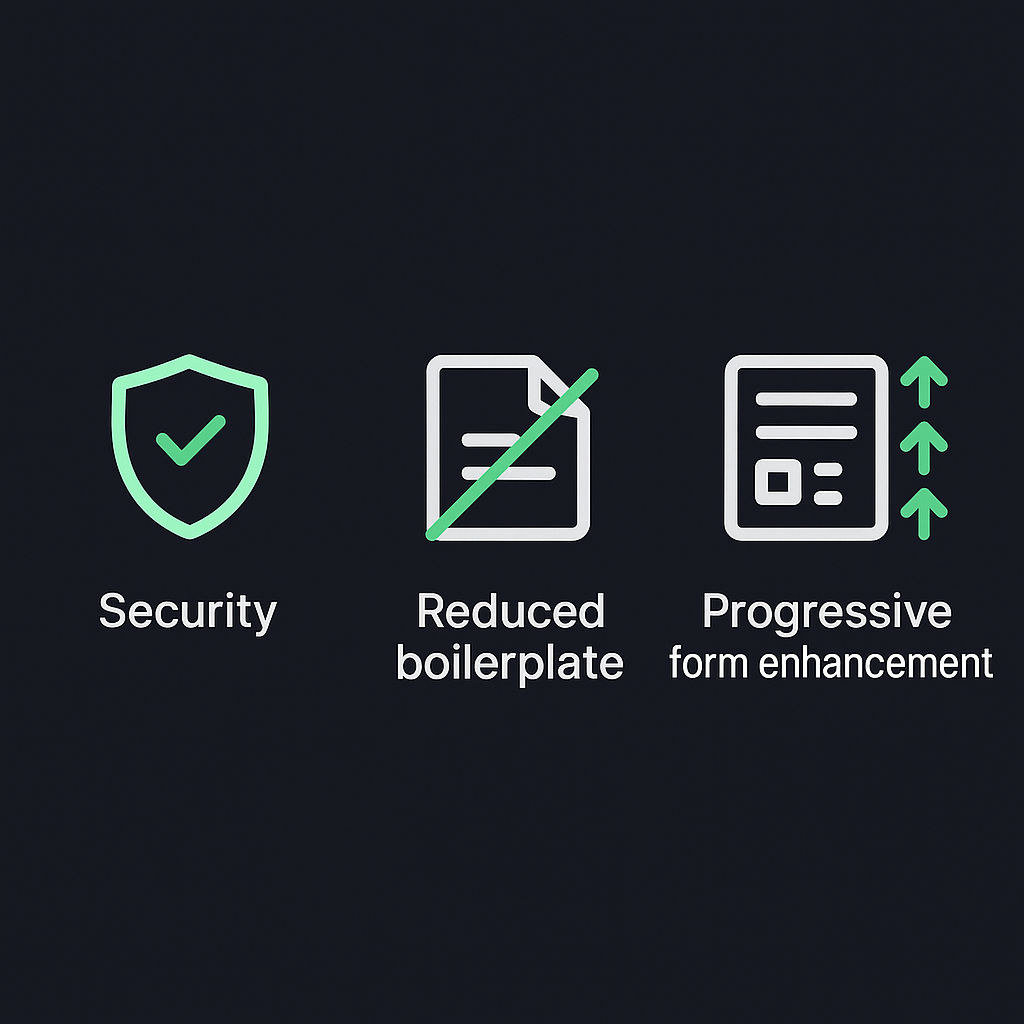
Key benefits:
Security: your logic and sensitive operations never reach the browser
Reduced boilerplate: no need for `/api/*` endpoints
Progressive form enhancement: forms keep working even if JavaScript fails
Getting Started with Server Actions
In a Next.js component file, create your action:
"use server";

export async function addPost(data) {

  // run on the server

  await db.post.create({ data });

}
Import and pass it into a Client Component:
<NewPostForm action={addPost} />Manage form state with `useFormState()` from `react-dom` to track pending/idle states—learn more in the React DOM’s useFormState documentation .
Step | Description |
|---|---|
Create Server Action | Define an async function with "use server" |
Pass to Client Component | Import and use action prop in component |
Manage Form State | Use useFormState() to track states |
Optimistic Updates & Revalidation
Optimistic UI: immediately show a new post in the list while the server call runs
Revalidation: after mutation, re-fetch or revalidate data with the built-in Next.js caching tools
Feature | Purpose | Implementation |
|---|---|---|
Optimistic UI | Show immediate updates | Update UI before server response |
Revalidation | Fetch fresh data | Use Next.js caching/revalidation APIs |
Advanced Workflows and Form Handling
Server Actions shine when you need multi-step flows or error recovery. Wrap your call in `try…catch` to handle errors gracefully. For example, you might redirect to a custom error page:
"use server";

import { redirect } from "next/navigation";

export async function deleteAccount(id) {
  try {
    await db.user.delete({ where: { id } });
    redirect("/goodbye");
  } catch (e) {
    redirect("/error");
  }
}
Next.js will send a 307 redirect directly from the server; see the MDN Web Docs on 307 Temporary Redirect for HTTP behavior.
Extending Server Actions: Custom Hooks & Context
While Next.js provides the basics, you can layer extra ergonomics:
useServerAction: a hook that wraps your action with built-in error boundaries and loading states
useOptimisticServerAction: automates optimistic updates (rollback on failure)
Interceptors & runtime context: inject analytics, logging, or database clients into every call
Hook/Pattern | Functionality |
|---|---|
useServerAction | Error boundaries and loading states |
useOptimisticServerAction | Automates optimistic updates with rollback |
Interceptors & runtime context | Injects analytics, logging, or clients into actions |
Integrating with Third-Party Libraries
You’re not limited to Next.js alone. Here’s how Server Actions can play with other tools:
Authentication (Clerk)
"use server";

import { auth } from "@clerk/nextjs/app";

export async function secureAction() {

  const { userId } = auth();

  if (!userId) throw new Error("Not signed in");

  // …

}
Clerk’s `auth()` runs on the server, so you get type-safe user data—check out Clerk’s Next.js App Beta authentication guide .
Type-Safe RPC (oRPC)
Define schemas for your Server Actions to ensure request and response shapes match perfectly. Learn more in the oRPC overview guide .
A New Era of Mutation
You’ve seen how React Server Actions simplify data handling, combine with third-party services, and let you build rich forms and workflows without extra API layers. By adopting custom hooks, structured error objects, and runtime interceptors, you can tailor them to any architecture.
Happy coding!
:format(webp))
:format(webp))
:format(webp))