:format(webp))
:format(webp))
Next.js for Enterprise Applications: A Comprehensive Guide
Reading this will help you understand why Next.js has become a go-to framework for large organizations. You’ll see how it tackles common enterprise hurdles—from performance and scalability to security and maintainability—and discover advanced use cases and unique strategies that few articles cover.
Addressing Core Enterprise Challenges
Enterprises often wrestle with demanding requirements:
Performance under heavy load
Seamless scalability
Tight security controls
Long-term maintainability
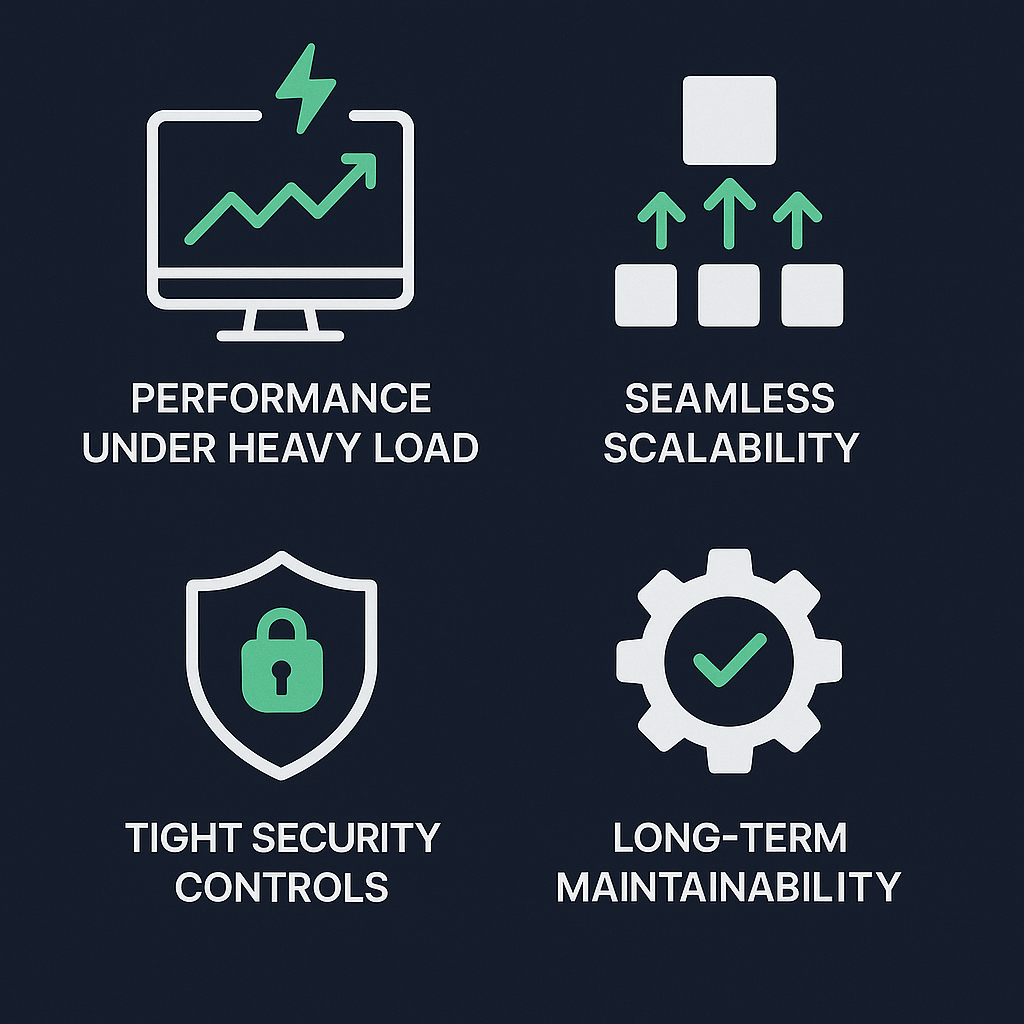
Next.js provides solutions tailored to each of these.
Performance: Faster Rendering and Smarter Bundling
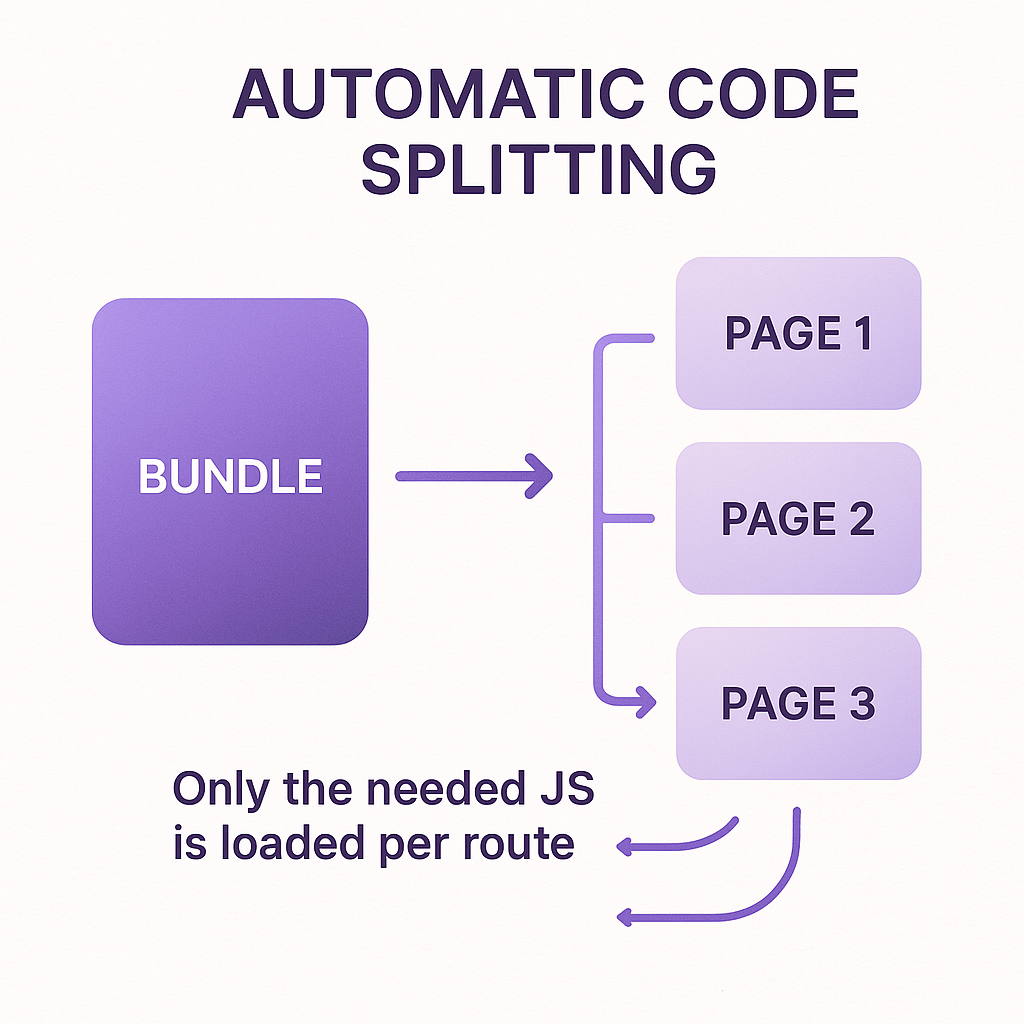
Next.js uses Automatic Code Splitting, so each page only loads the JavaScript it actually needs instead of a monolithic bundle (see Webpack’s code splitting guide ). That leads to quicker initial loads and snappier navigation.
It also offers Image Optimization out of the box. By analyzing your images and serving them in modern formats (like WebP) with sensible dimensions, it cuts down on bytes transferred—learn more in this freeCodeCamp tutorial on the Next.js Image component .
Scalability: Serverless and Incremental Builds
When traffic surges, you want your site to scale without manual intervention. Next.js integrates with Serverless Functions, enabling you to run backend code on demand without managing servers—check out DigitalOcean’s tutorial on deploying Next.js with serverless functions . Plus, Incremental Static Regeneration lets you update static pages after deployment, eliminating full rebuilds and keeping content fresh, as explained in the LogRocket Blog on Incremental Static Regeneration .
Security: Built-In Protections
Preventing XSS, CSRF, and other web threats is vital. Next.js enforces strict headers (like Content Security Policy) and provides secure defaults, reducing the surface area for common attacks—see Snyk’s Next.js Security Best Practices for more details.
Maintainability: Convention over Configuration
A standardized folder structure—`pages/`, `public/`, `styles/`—means new team members can onboard quickly. The clear routing conventions and well-documented APIs reduce code drift and make large codebases easier to manage.
Core Next.js Features Empowering Enterprises
Dig deeper and you’ll find a toolkit designed for robust, scalable apps.
Feature | Description |
|---|---|
Automatic Code Splitting and Caching | Breaks up JS by route and caches unchanged code at the CDN edge. |
Image Component | Automatic resizing, lazy-loading, and modern formats. |
API Routes for Backend Logic | Frontend and backend code sharing types, utilities, and env variables. |
Incremental Static Regeneration (ISR) | Background page re-generation on a per-page basis without full rebuilds. |
Automatic Code Splitting and Caching
Breaks up your JavaScript by route
Caches unchanged code at the CDN edge
Your users download only what they need, and assets stay fresh yet cacheable.
Image Component
The `<Image>` component automatically resizes, lazy-loads, and serves modern formats. No third-party plugins required.
API Routes for Backend Logic
Next.js lets you define API Routes in the same project, so frontend and backend can share types, utilities, and environment variables.
Incremental Static Regeneration (ISR)
With ISR, you can designate pages to re-generate in the background, on a per-page basis, without touching others. Great for large catalogs or blogs with frequent updates.
Advanced Strategies Unique to Next.js
Beyond the basics, enterprises benefit from strategies that go well beyond standard frameworks.
Headless Architecture and Decoupled Frontends
By pairing Next.js with headless CMSs or e-commerce platforms, you decouple content management from presentation. This architecture lets you integrate multiple backends (Contentful, Shopify, Strapi) while maintaining a unified React frontend—refer to the Contentful tutorial on Using Next.js with Contentful for an example integration.
Omnichannel Delivery
Next.js apps can target not only web browsers but also mobile devices (via React Native Web) and even IoT dashboards. This flexibility ensures a consistent brand experience across all touchpoints—see the React Native Web documentation for setup details.
Real-Time Dashboards and Admin Panels
Need live updates? Employ WebSockets or libraries like Pusher within Next.js API Routes to power analytics dashboards or chat modules. The unified codebase simplifies syncing real-time data with UI components—check out this Pusher tutorial on real-time data with Next.js .
Freedom to Mix and Match Tools
Use Prisma or TypeORM for databases, Tailwind or Chakra for styling, Apollo or SWR for data fetching—Next.js never locks you into a single ecosystem.
CDN and Edge Network Integration
Deploying on modern CDNs puts your content geographically closer to users. That means sub-100 ms response times in key markets—learn more from Cloudflare’s CDN overview .
SEO-Ready Architecture
Next.js is built to help search engines crawl your content effectively. With server-side rendering and metadata control, you’ll rank higher for critical keywords, especially on content-heavy sites—see Google’s guide to server-side rendering for SEO .
Measurable Business Impact
Enterprises adopting Next.js have seen real improvements:
Learn G2 article on Next.js benefits reports 50 % faster time-to-market thanks to reusable components and CLI scaffolding.
The State of JS report on Next.js shows 79 % of developers report increased productivity and satisfaction when using Next.js.
Case in point: a Vercel customer case study describes how a global retailer switched to Next.js and observed a 30 % lift in conversion rates after optimizing page loads.
Metric | Value | Source |
|---|---|---|
Time-to-Market Improvement | 50% | Learn G2 article on Next.js benefits |
Developer Productivity & Satisfaction | 79% | State of JS report on Next.js |
Conversion Rate Lift | 30% | Vercel customer case study (global retailer) |
Next-Level Enterprise Frontends
By combining performance-focused features, robust security, and a flexible architecture, Next.js stands out as an enterprise-grade framework. Whether you’re building a large-scale publishing platform, a data-intensive dashboard, or an omnichannel storefront, it delivers the tools you need today—and scales with you tomorrow.
:format(webp))
:format(webp))
:format(webp))