:format(webp))
:format(webp))
A Comprehensive 2025 Guide to Migrating from Ember to React
By the end of this guide, you’ll know how to assess your existing Ember app, plan a phased migration to React 19, pick the right tools and patterns, manage risk and cost, and measure success every step of the way.
Assessing Your Current Ember Application
Before you rewrite anything, audit your Ember codebase:
Feature inventory
List active routes, components, services and add-ons. Note any deprecated Ember 5.x APIs you still rely on.
Category | Current Count | Deprecated Items |
|---|---|---|
Routes | 12 | 2 |
Components | 35 | 5 |
Services | 8 | 1 |
Add-ons | 10 | 3 |
Technical debt & security gaps
Identify outdated dependencies and security vulnerabilities in your Ember 3.x or 4.x apps. According to the Ember security advisory , unpatched older versions expose you to XSS and deserialization flaws.
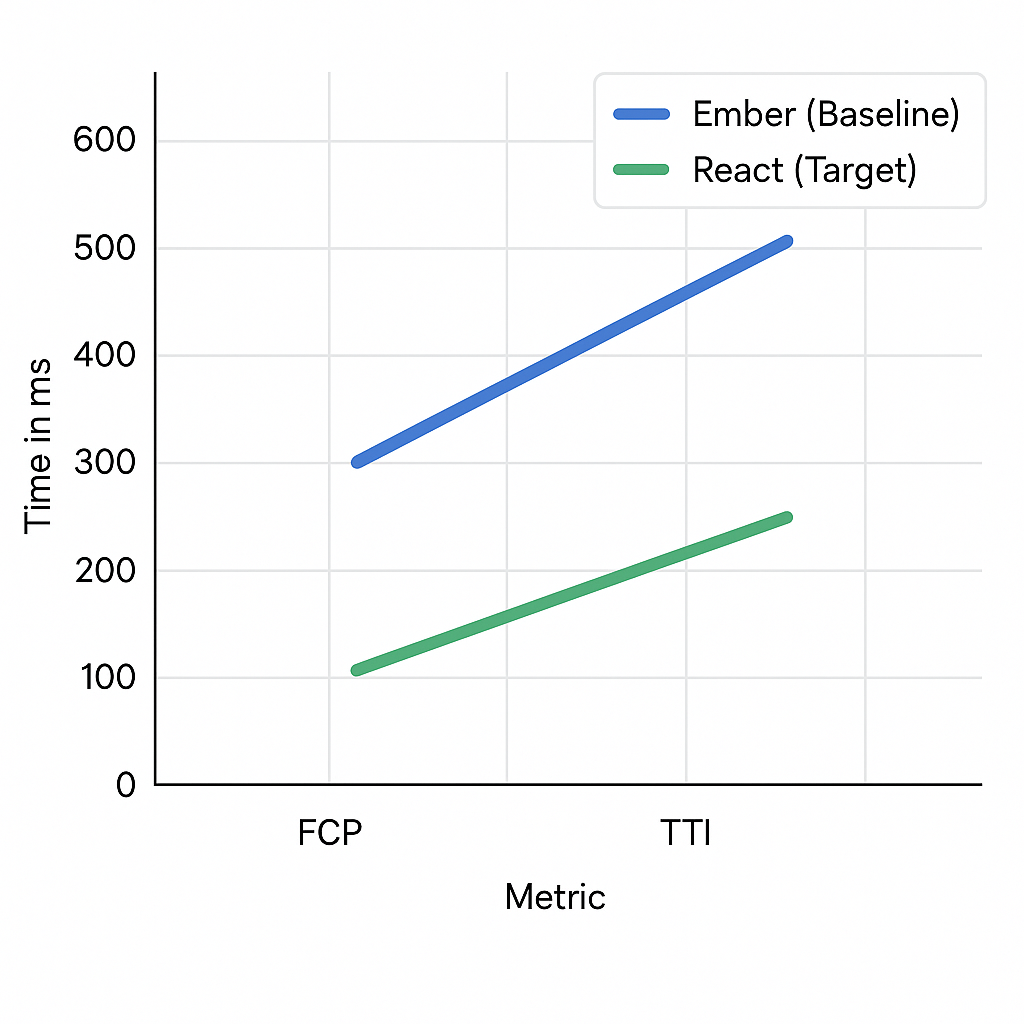
Performance baseline
Record metrics such as first contentful paint (FCP) and time-to-interactive (TTI) using Google Lighthouse documentation . This gives you concrete KPIs to beat in React.
Cost of upkeep
A Gartner report on technical debt costs estimates that legacy framework maintenance can consume up to 30% of your engineering budget annually.
Why Staying on Ember Can Cost You
Ember’s official roadmap shows a shift toward Octane, but not every team can upgrade without breaking changes. Vendor lock-in and dwindling community support for older versions can make bug fixes and new features more expensive over time.
Evaluating Team Readiness and Training Path
A smooth migration hinges on people and process as much as code.
Skillset survey
Assess who already knows React, TypeScript and modern bundlers.
Talent pipeline
Launch an internal guild or pairing rotations to diffuse React expertise throughout your team.
Training resources
Mentorship & code reviews
Assign React “champions” to review pull requests and host weekly office hours.
Understanding React 19 and Future-Proofing
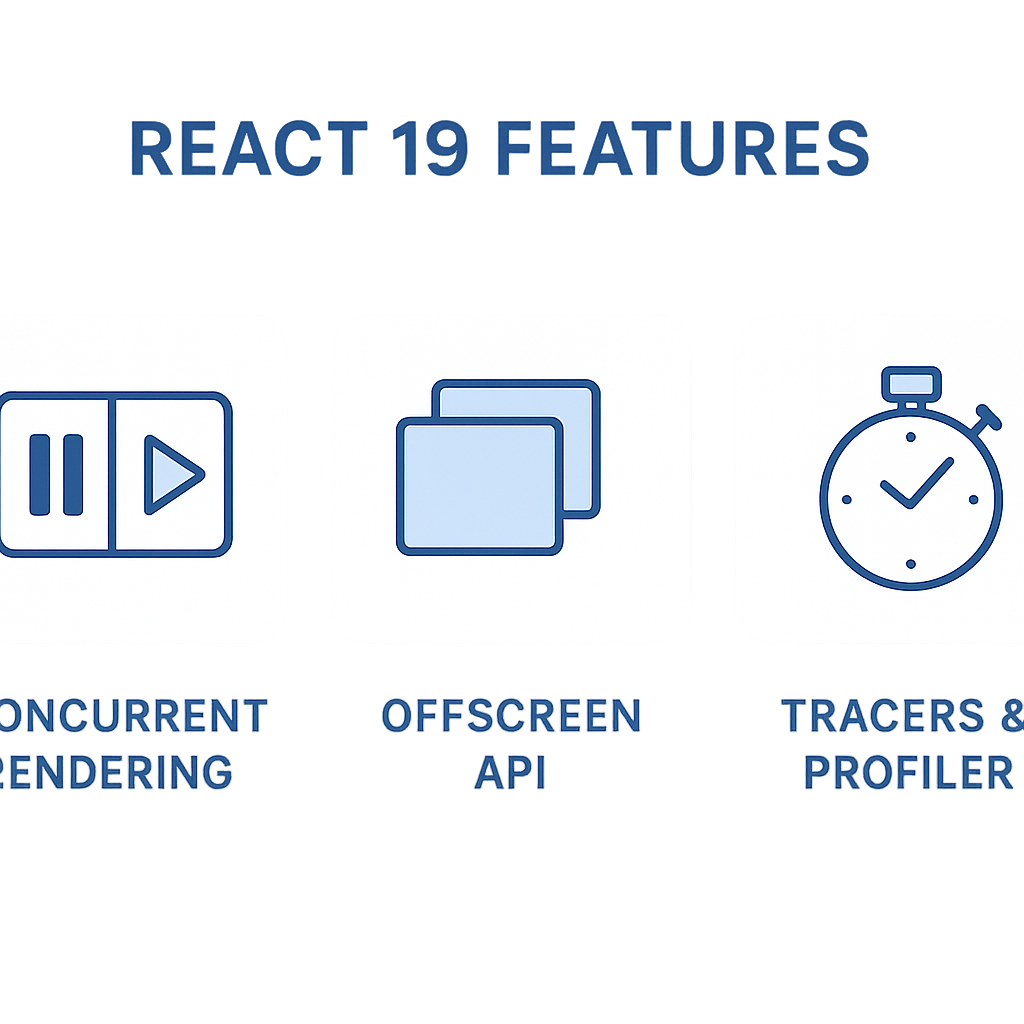
React 19 introduces Concurrent Rendering, Offscreen and built-in tracing hooks to help you deliver snappier UIs.
Concurrent Rendering
Lets React pause low-priority updates and keep your app responsive under load.
Offscreen API
Pre-render parts of the UI off-screen to eliminate layout jank.
Tracers & Profiler
Diagnose slow renders with per-component timing.
According to the 2023 Stack Overflow Developer Survey , 40.6% of developers use React, compared to just 1.7% who use Ember—ensuring a bigger talent pool and ecosystem.
Crafting a Component and Design System Migration Strategy
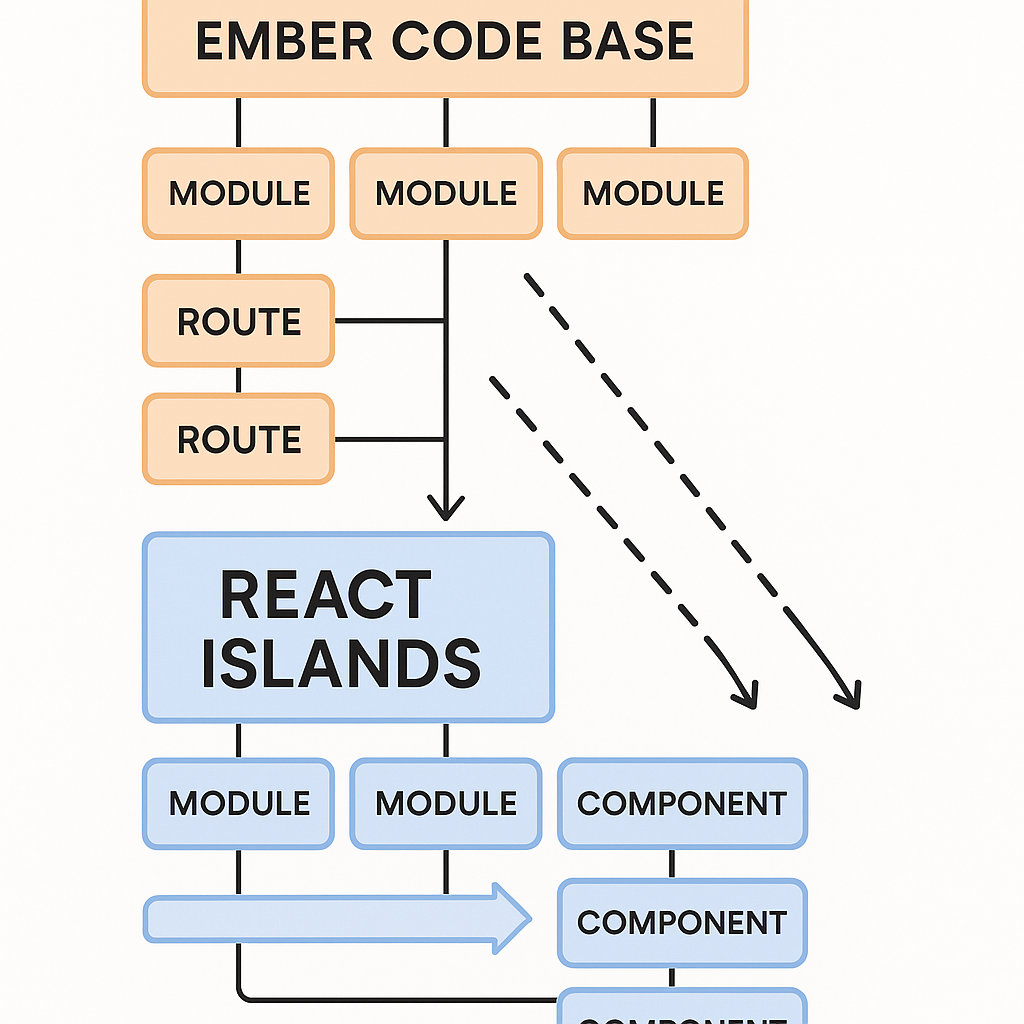
You don’t have to rewrite every template at once.
Strangler pattern Embed React “islands” inside Ember templates, gradually strangling out old code.
Design tokens
Export Ember’s CSS variables with Style Dictionary and import them into a React component library.
Codemods for Handlebars → JSX
Write custom scripts to:
Map `{{action}}` helpers to `onClick` handlers
Convert computed properties to `useMemo`
Replace `{{if}}`/`{{each}}` with conditional rendering or `.map()`
Visual regression tests
Use tools like Chromatic or Percy to ensure parity.
Avoiding Accessibility Regressions
When you swap out Ember components, double-check ARIA roles, focus management and keyboard navigation. Tools like axe-core’s automated accessibility tests can automate part of this audit.
Planning a Phased Rollout with the Strangler Pattern
A big-bang switch is risky. Instead, partition your routes and roll out React one slice at a time.
Routing coexistence
Run Ember Router and React Router in parallel. Assign URL ownership per segment.
Feature flags
Use LaunchDarkly feature flags to toggle between Ember and React widgets in production.
SEO & Analytics continuity
Preserve canonical tags and meta data in server-side renders. Mirror analytics events across frameworks to avoid regressions.
This approach lets real users test React features behind a flag and gives you instant rollback if something breaks.
Data Layer and State Management Transition
Ember Data gives you models, adapters and serializers. You can phase that out incrementally.
Modern query clients
Switch to TanStack Query’s data fetching and caching hooks for fetching, caching and retries.
Preserve API contracts
Write adapter layers that expose the same endpoints Ember used. Gradually retire serializers.
State management
Migrate Ember services and computed props to React Context or lightweight stores like Zustand or Jotai.
Common anti-patterns
Avoid global store bloat and prop drilling by co-locating state and using selectors or hooks.
Data Fetching Parity
Ember Data’s optimistic updates, pagination and live polling can be replicated with TanStack Query’s mutation and subscription hooks.
Tooling, Testing and Observability Transition
Your new React stack brings new build tools, test runners and telemetry.
Build & bundler
Move from Ember CLI/Broccoli to Vite’s fast build pipeline . Map environment configs, asset pipelines and chunk splitting.
Observability
Integrate OpenTelemetry for web-vitals and custom spans to get end-to-end visibility.
Security parity
Revalidate CSP rules and DOM sanitization when you move from Handlebars auto-escaping to JSX.
Governance, Risk Management, and Cost Control
Migration isn’t just a dev project; it’s an organizational effort.
Budget & timeline
Break work into sprints of 2–3 routes each. Track burn-down and adjust scope.
Risk register
Document potential regressions, third-party library gaps and staffing changes.
ADR & RFC process
Create lightweight Architectural Decision Records for major patterns—routing, state, data layer.
Legal & compliance
Audit licenses when replacing Ember add-ons. Maintain an audit trail of refactors.
Cost optimization
Monitor CI minutes, bundle sizes and SSR compute. Flag spikes early.
Measuring Success: Metrics That Matter
Keep your eyes on concrete KPIs:
Performance: FCP, TTI, Time to First Byte
Stability: error rate, uptime
Developer velocity: PR cycle time, story completion rate
Business outcomes: conversion rate, checkout drop-off
Case Study Snapshot: Acme Corp’s Migration
Background
A 10-year-old Ember app with 200 routes and 30 custom add-ons.
Reasons
Hard to hire Ember talent, sluggish UI during peak loads.
Approach
Strangler pattern with 5-route slices, custom Handlebars→JSX codemods, feature flags for toggling.
Results
25% faster TTI, 40% fewer runtime errors, 50% reduction in hosting costs after moving SSR to Next.js.
Lessons
Early investment in testing and telemetry paid dividends. Governance via ADRs kept patterns consistent across teams.
Your Roadmap to a Smooth Migration
Migrating from Ember to React in 2025 is a substantial investment, but with a clear audit, phased rollout, modern tooling and solid governance, you’ll end up with a more maintainable codebase, happier developers and faster user experiences. Start small, measure often, and keep both Ember and React working side by side until you’ve confidently gone all-in on React 19.
:format(webp))
:format(webp))
:format(webp))