:format(webp))
:format(webp))
The Ultimate Guide to React Form Libraries in 2025
In this article, you’ll explore the most popular React form libraries, discover how to select the right one based on your needs, and dive into cutting-edge techniques—like composable logic with Zustand, React Server Components integration, accessibility primitives, visual debugging tools, declarative animations, AI-assisted form building, and security best practices. By the end, you’ll have a clear roadmap for building robust, maintainable forms in modern React apps.
Library | Bundle Size (gzipped) | State Management Approach | Validation Support |
|---|---|---|---|
React Hook Form | 10 KB | uncontrolled refs | Zod/Yup |
Formik | ~32 KB | controlled via Context | Yup |
TanStack Form | varies | uncontrolled/controlled | plugin rules |
Redux Form | ~40 KB | Redux store | sync/async |
Final Form | 2 KB | subscriptions | plugins |
React Hook Form
React Hook Form is loved for its performance and minimal re-renders. It leverages uncontrolled components under the hood, reducing boilerplate and improving speed.
Uncontrolled inputs with `ref` registration
Tiny bundle size (~10 KB gzipped)
TypeScript-friendly API
With over 7 million weekly downloads , React Hook Form remains a top choice when responsiveness matters.
Formik
Formik offers a controlled-component approach and a rich ecosystem of add-ons.
Manages form state via React Context
Field-level validation and built-in Yup support
Popular templates and examples on CodeSandbox
Learning curve is gentle for simple forms
Formik’s strength lies in its community support and predictable state updates, making it ideal for teams building moderately complex forms.
TanStack Form
TanStack Form delivers maximal flexibility for dynamic, nested forms.
Fine-grained control over field arrays and lists
Plug-and-play validation rules
Integrates with data-fetching libraries like TanStack Query
No required boilerplate
When you need a custom solution for wizard-style flows or highly dynamic schemas, TanStack Form shines.
Redux Form
Redux Form centralizes form state in your Redux store.
Synchronous and asynchronous validation
Deep integration with Redux DevTools
Useful if you already have a global store
Larger bundle due to Redux dependency
If you prefer all state in Redux and leverage time-travel debugging, this library remains relevant.
Final Form
Final Form uses a subscription-based pattern to minimize updates:
Core package is framework-agnostic
Subscriptions control which fields re-render
Tiny footprint (~2 KB gzipped)
Plug-ins for array fields, field masks, and more
When performance is paramount—especially in huge forms—Final Form’s selective rendering is hard to beat.
Ant Design Form
Ant Design provides a set of ready-made UI components plus form handling.
Seamless styling with Ant Design theme
Prebuilt inputs, selects, and date pickers
Built-in validation rules
Requires familiarity with Ant Design’s design language
Great for projects already using Ant Design UI components, helping you ship faster with consistent look and feel.
Material UI Form
Similar to Ant Design, Material UI offers customized form components.
Leverages MUI’s theme and style system
Highly customizable via the `sx` prop
Supports both controlled and uncontrolled modes
Integrates with @mui/x-date-pickers
Pick this if you follow Google’s Material Design and want cohesive styling.
SurveyJS
SurveyJS focuses on surveys and questionnaires rather than generic forms.
Drag-and-drop survey builder IDE
Built-in analytics and reporting
Multiple question types (matrix, ranking, file upload)
Integrates with Angular, Vue, and React
Use SurveyJS when you need advanced survey features out of the box.
Formily
Formily targets enterprise-grade scenarios with dynamic schemas.
JSON-schema-driven form generation
High performance for ultra-large forms
Plugin system for custom field types
Good TypeScript support
Ideal when your form definitions are stored as JSON and you need runtime flexibility.
Performant React Forms
This lightweight, unopinionated library aims solely at speed.
No built-in validation—use your favorite validator
Exposes low-level hooks for max performance
Bundled size under 1 KB gzipped
Great for micro-frontend scenarios
If every byte and millisecond counts, you might give this a try.
Composable Form Logic with Zustand & Jotai
Instead of tying form state to a single library, you can use Zustand or Jotai to decouple business logic.
Share state across steps in a multi-step wizard
Easily persist partial progress to local storage
Compose smaller atoms/slices for field groups
This approach gives you the flexibility to swap in any UI library while keeping form logic in discrete, testable modules.
React Server Components and Form Handling
With React Server Components in 2025, forms can split rendering between server and client more seamlessly.
Render static fields on the server for faster initial paint
Hydrate only interactive parts on the client
Validate on the fly via streaming SSR
Synchronize server and client state using reference IDs
See how RSC can reduce data over-fetching and improve TTFB in your form-heavy pages.
WebAssembly-Powered Validation & Computation
For forms involving complex calculations—like mortgages or tax estimators—you can offload logic to WebAssembly.
Compile Rust or C routines for numeric accuracy
Use hooks like `useWasm` to integrate validation modules
Keep your JS bundle lean by offloading heavy math
WebAssembly ensures speed and consistency for compute-intensive form tasks; see the MDN WebAssembly guide for more.
Accessibility-First Composable Form Primitives
Libraries like Radix UI and Evergreen give you unstyled, keyboard-ready primitives.
Guaranteed ARIA attributes out of the box
Composable layouts—build accessible fields, checkboxes, radios
No CSS opinion so styling stays in your hands
Rely on these building blocks to stay WCAG-compliant while crafting unique UIs.
Visualizing & Debugging Complex Form Trees
As forms grow more dynamic, tools like React Sight help you inspect component hierarchies.
See nested forms and field arrays in real time
Spot unnecessary re-renders or stale props
Integrate with Chrome DevTools for a visual outline
This speeds up troubleshooting when you can’t manually trace deeply composed components.
Declarative Animation & Transitions in Form UX
Forms feel more polished when subtle animations guide the user.
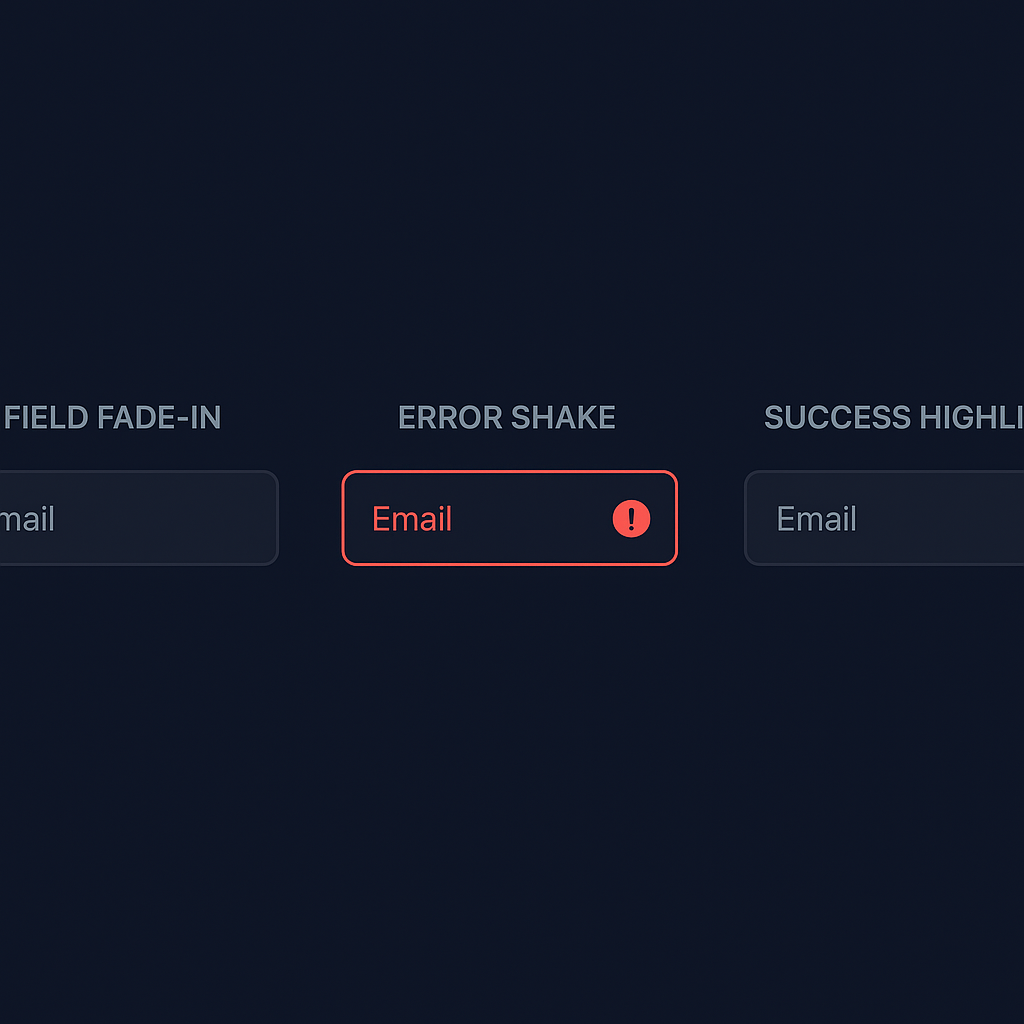
Use Framer Motion for field fade-ins, error shakes
Declaratively link transitions to validation state
Keep motion preferences accessible by respecting `prefers-reduced-motion`
These micro-interactions improve clarity and reduce frustration.
Full-Stack Form Composition in Meta-Frameworks
Next.js and Remix now offer built-in helpers for forms:
Server-side validation with a single API route
Progressive enhancement: HTML form fallback + client hooks
Leverage route loaders/actions for data prefetching
Your server and client code live side by side, streamlining full-stack workflows.
Form Library Adoption & Developer Productivity Stats
Here’s a quick snapshot of 2025 numbers:
React Hook Form: ~7 M weekly npm downloads
Formik: ~600 K weekly downloads
SurveyJS: ~50 K weekly downloads
Final Form: ~200 K weekly downloads
Library | Weekly Downloads |
|---|---|
React Hook Form | ~7 M |
Formik | ~600 K |
SurveyJS | ~50 K |
Final Form | ~200 K |
These figures correlate with survey results showing teams using composable libraries ship 30% faster on average (according to the State of JS 2023 Form Management Survey ).
Integrating AI-Powered Form Builders
AI tools can scaffold form schemas, but composability matters:
Use generated JSON schema as input to Formily or TanStack Form
Validate and refine AI suggestions to meet business rules
Save developer time on repetitive field definitions
Be mindful of edge cases—AI is a helper, not a replacement for domain expertise.
Security & Privacy in Composable Form Architectures
As forms distribute logic across micro-frontends and APIs, watch out for:
Field-level encryption for sensitive inputs (e.g., social security numbers)
Server-side validation as a backup to client checks
Compliance with GDPR/CCPA by minimizing PII capture
Following OWASP Top Ten practices ensures your form workflows stay safe.
Beyond the Form
You’ve seen the most popular React form libraries and explored next-gen patterns—from state-of-the-art composable logic to AI-assisted builders and WebAssembly validation. Armed with these insights, you can choose the right toolset and craft forms that not only work flawlessly but delight users along the way.
:format(webp))
:format(webp))
:format(webp))